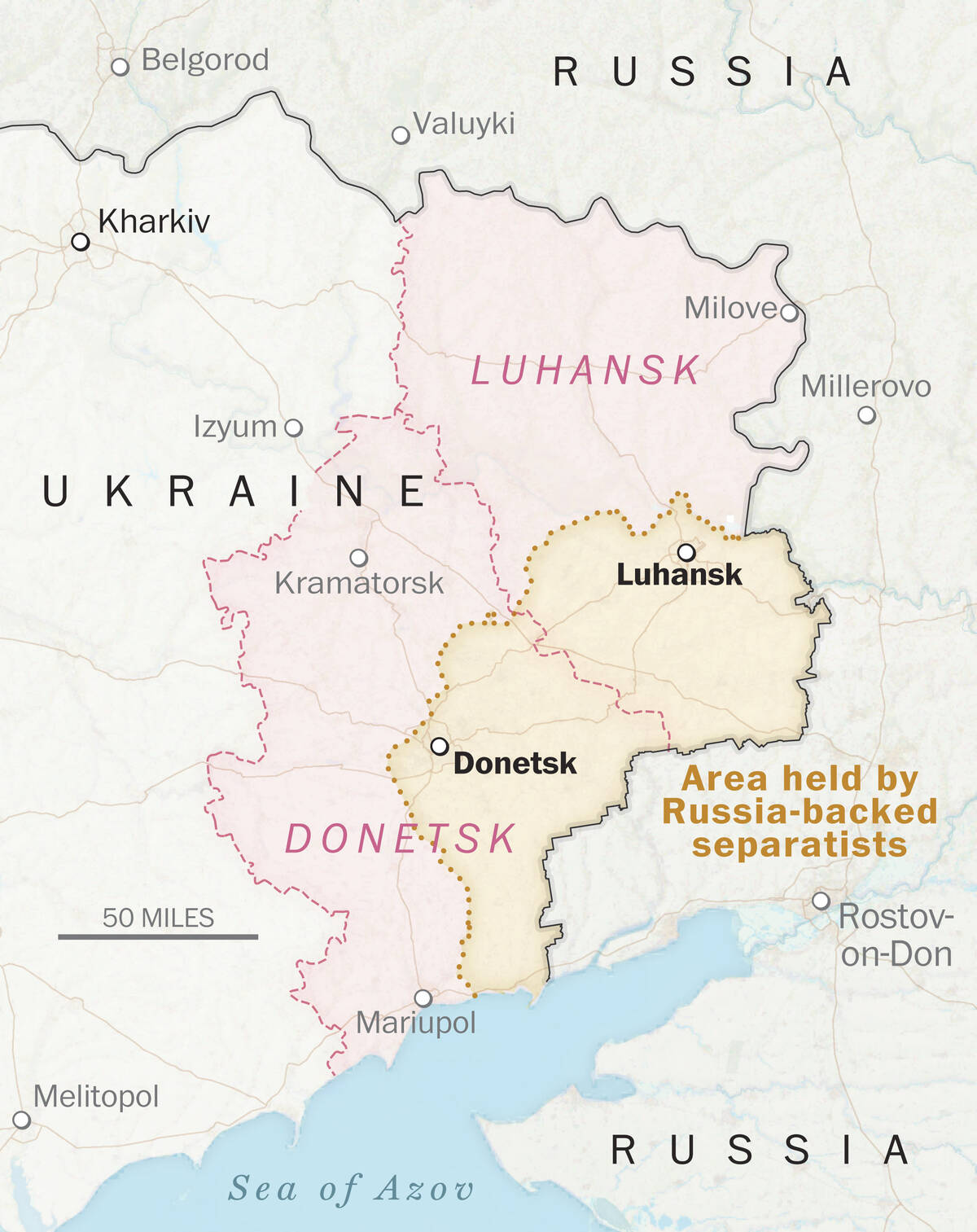
| Welcome to The Daily 202! Tell your friends to sign up here. On this day in 1954, the United States starts the first mass inoculation of schoolchildren against polio, using the vaccine developed by Jonas Salk. | | |  | The big idea | | Some U.S. sanctions on Russia could be highly individualized | 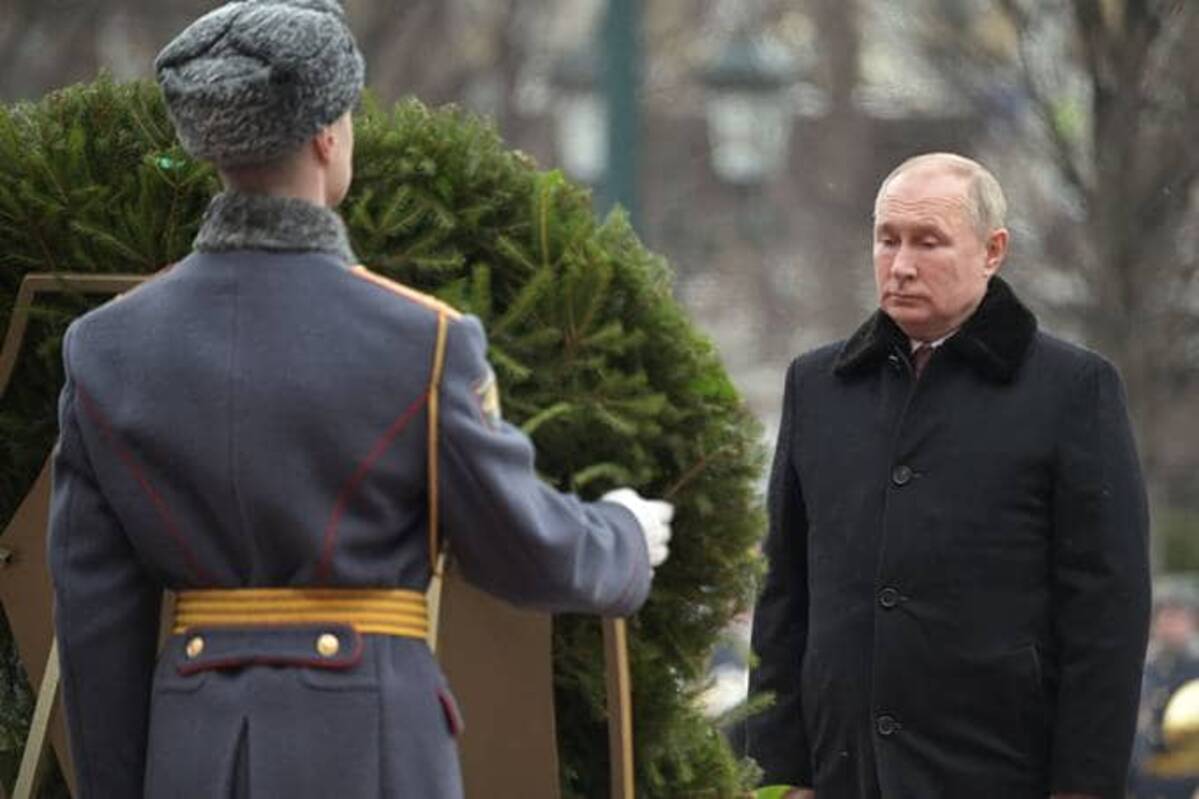 Russian President Vladimir Putin takes part in a wreath laying ceremony at the Tomb of the Unknown Soldier on Wednesday. Sputnik/Aleksey Nikolskyi/Kremlin via REUTERS | | | The Biden administration has already signaled its intent to target prominent Russians and even their children with sanctions. And now it's not ruling out such a tactic on Russian President Vladimir Putin himself. Individual sanctions have gained currency over the years among sanctions experts. The idea is that hurting an individual oligarch — blocking their yacht from docking in a Spanish port, kicking their kids out of a British private school, denying them travel visas to visit Paris — could fuel elite dissatisfaction with Putin. The most prominent opposition figure in Russia, Alexei Navalny, has called on the West to go after Putin's oligarch friends that way. | - What would it take to go after Putin, a reporter asked Deputy National Security Adviser for International Economics Daleep Singh.
- "I'm not going to telegraph exactly what it would take and under what circumstances that would occur. But no option is off the table," he said. (National Security Council spokesperson Emily Horne retweeted an account of the exchange.)
| | One, the "swift and severe" sanctions are swift, but not as severe as promised. President Biden and close U.S. allies unveiled a tempered package of punitive measures — potentially painful but hardly the devastating blow they'd telegraphed for weeks — to punish Russia for taking steps to seize de facto control of large swaths of eastern Ukraine and to deter Putin from escalating the crisis. They'll hurt. Cutting off Russia's central bank from U.S. and European financial markets and blocking assets of two major financial institutions closely tied to state-run projects and the military is significant. But it's unlikely to collapse the Russian economy. Second, more sanctions are coming. So is more Russian escalation. U.S. speeches and briefings had a real "don't make me stop this car" energy Tuesday, as officials from Biden on down made it absolutely clear there will be more sanctions from more allies if — when, really, if you read between the lines — Putin escalates the standoff. "As Russia contemplates its next move, we have our next move prepared as well," Biden said in prepared remarks in the East Room of the White House unveiling what he called "the first tranche of sanctions" and predicted more would come "in the days ahead." Third, the U.S. is bracing for truly cataclysmic potential outcomes — sanctions or not. Sanctions, Singh said, are "meant to prevent and deter a large-scale invasion of Ukraine that could involve the seizure of major cities, including Kyiv. They're meant to prevent large-scale human suffering that could involve tens of thousands of casualties in a conflict. And they're meant to prevent the installation of a puppet government, controlled by Moscow, that subjugates the will of Ukraine and prevents the people of Ukraine from choosing their own destiny and setting their own course." Fourth, U.S. allies are holding. For now. Biden's predictions that American allies in Europe would hold together on sanctions seems to be holding true for now. Australia, Britain, Canada, the European Union, Japan and Germany have each announced various steps. | | That consensus might fray if the United States pushes for sanctions with potentially debilitating effects on economies that rely on Moscow as a trading partner, and notably on its energy exports. But it might not: Arguably the most significant development Tuesday was Berlin freezing the Nord Stream 2 pipeline project designed to ferry Russian natural gas to Germany. Fifth, much depends on whether that freeze is temporary or permanent. German Chancellor Olaf Scholz said his country would "reevaluate" the Nord Stream 2 project. At the White House, Singh seemed to signal a lasting shift. "This decision will relieve Russia's geostrategic chokehold over Europe through its supply of gas, and it's a major turning point in the world's energy independence from Russia," he said. Sixth, Putin's best weapon in the standoff may be the American gas pump. For the second time in a week, Biden warned the crisis and America's response would hurt the U.S. economy, saying "defending freedom will have costs for us as well, here at home." He promised he would use "every tool at our disposal" to protect Americans from rising gas prices. Sticker shock at the pump was already a political liability for Biden — inflation has swallowed much of the wage gains in the U.S. economy over the past year. European economies are more dependent on Russian energy and therefore even more exposed. Russia is well aware of its leverage. Dmitry Medvedev, deputy chairman of Russia's security council, warned in a tweet Tuesday of the advent of a "brave new world" in which Europeans would "very soon" be paying double for natural gas. | | |  | What's happening now | | Ukraine prepares state of emergency; Russia vows to resist U.S. sanctions | 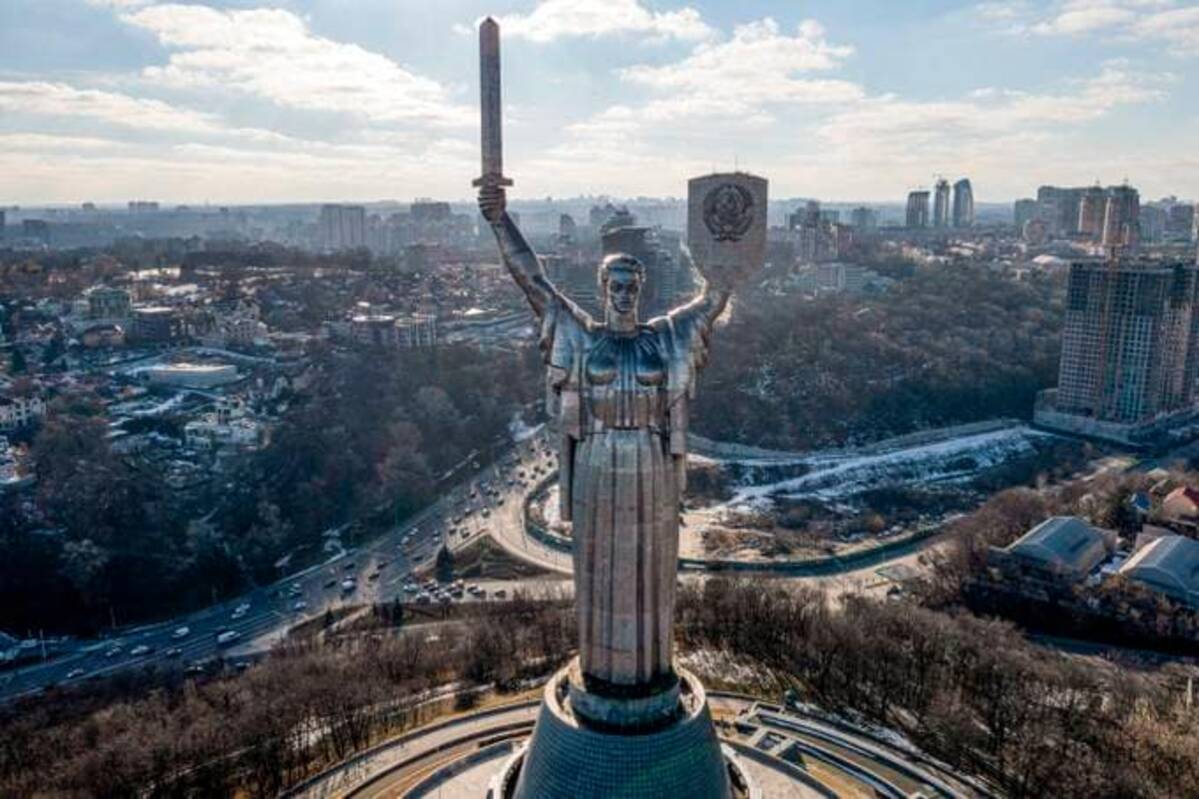 A view of Ukraine's the Motherland Monument in Kyiv on Sunday, Feb. 13. (Efrem Lukatsky/AP) | | | "Ukraine announced plans Wednesday to declare a state of emergency, as the nation prepared to defend itself from an expected Russian invasion," Robyn Dixon, Rachel Pannett and Ellen Francis report. "The 30-day state of emergency, subject to approval by parliament, would impose curfews and restrict mass gatherings in certain regions 'if necessary' to confront increased Russian aggression, the chief of Ukraine's National Security and Defense Council said. It follows a call-up of reservists as Ukraine braces for Russian President Vladimir Putin's next moves." | Russia evacuating embassy in Ukraine as crisis escalates | Democratic Rep. Rashida Tlaib to deliver response to Biden's State of the Union address | | "Rep. Rashida Tlaib (D-Mich.) will deliver a response to President Biden's State of the Union address next week on behalf of the progressive Working Families Party group, in a rare instance of a formal response by a member of the president's own party," Amy B Wang reports. | E.U. will unveil a strategy to break free from Russian gas, after decades of dependence | | "The strategy to split from Russian energy, expected to be announced by the European Commission next week, would give Europe a freer political hand against Russia than it has had in the past. It would take years and come with a hefty bill for European taxpayers," Michael Birnbaum and Steven Mufson report. | | |  | Lunchtime reads from The Post | | When it comes to Putin, sanctions may have limits as a tool of coercion | 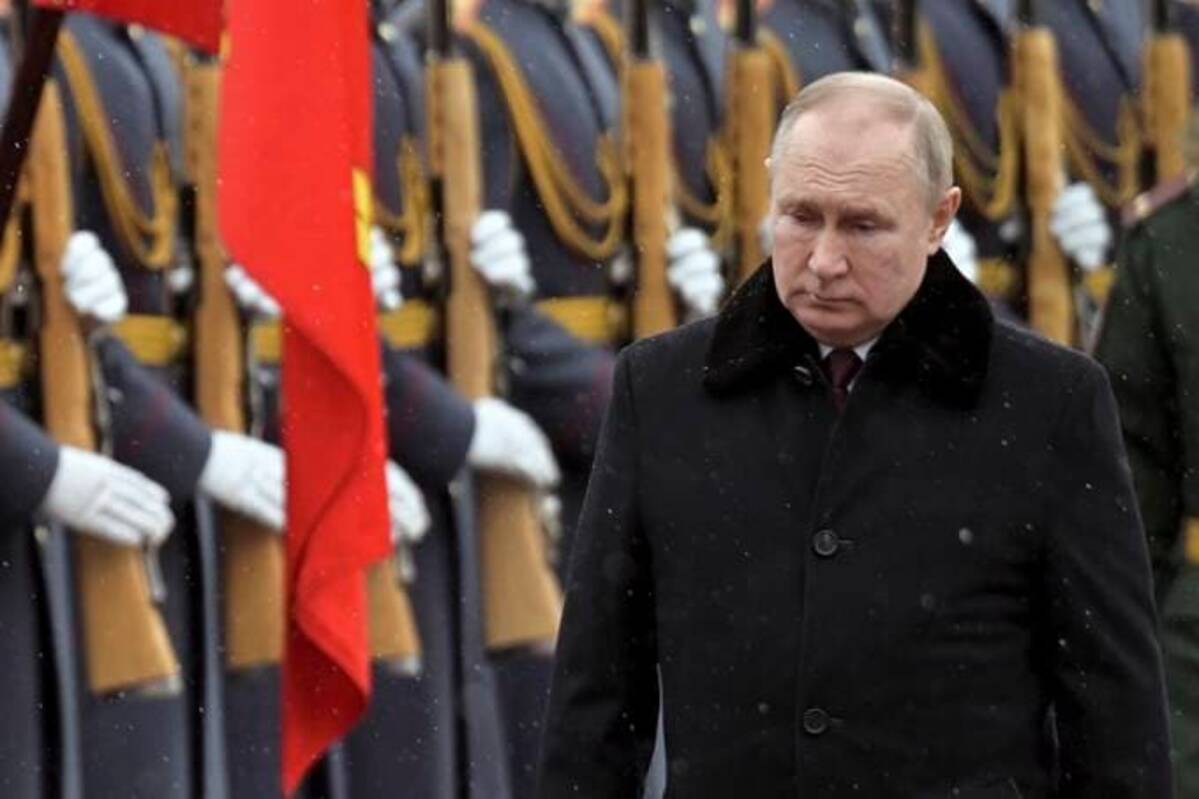 Russian President Vladimir Putin attends a wreath-laying ceremony today at the Tomb of the Unknown Soldier, near the Kremlin Wall during the national celebrations of the 'Defender of the Fatherland Day' in Moscow. (Alexei Nikolsky, Kremlin Pool Photo via AP) | | | "For months, top U.S. and European officials have warned the Russian leader he will face severe economic consequences should he invade Ukraine. But as the crisis escalates, raising the risk that the 190,000 Russian troops and enabling forces around Ukraine will mount a large-scale invasion, Washington is facing the reality that even the harshest sanctions may have limits," Paul Sonne reports. "'When it comes to major military or national security issues, this type of coercion — punitive economic measures — rarely works,' said Dursun Peksen, a political science professor at the University of Memphis who studies the effectiveness of sanctions. 'I therefore remain skeptical that the Russian regime will be willing to make any significant concessions considering the significance they attach to the issue under dispute.'" | 5,000 miles away but hitting home: How Russia's advance on Ukraine is rattling Americans | | Russia's most recent moves "threaten to hit Americans where they live — in the form of possible surges in energy prices, rattled financial markets and the prospect of cyberattacks on American institutions in response to U.S. economic sanctions against Russia," Marc Fisher reports. "In addition, any ground conflict could expand into countries that the United States is obligated to defend as part of the North Atlantic Treaty Organization's post-World War II alliance." | Republicans are already spending big on online fundraising machines for 2024 | | "A half-dozen potential GOP candidates, most of whom won't be on the ballot in 2022, still spent more than $1.4 million each on email list rentals, digital consulting and online fundraising in 2021, according to a POLITICO analysis of campaign finance disclosures…all of them are already running a race to build the type of fundraising base that can sustain a national campaign and test their appeal to a national audience," Politico's Ella Schneider and Scott Bland report. "The prime example is Sen. Ted Cruz (R-Texas), whose campaign committee spent a whopping $13.6 million overall in 2021 — more than almost every senator running for reelection in 2022, even though Cruz's seat isn't up for two more years. At least $3.3 million of that went into digital services, while Sen. Josh Hawley's (R-Mo.) campaign spent $1.7 million online last year. Two PACs started by contenders currently out of office, former U.N. Ambassador Nikki Haley and former Secretary of State Mike Pompeo, spent $2.4 million and $1.4 million online, respectively." | The doctor advising DeSantis | | "Dr. Joseph A. Ladapo has come out strongly against mask mandates and lockdowns, only supports vaccination campaigns if the shots are voluntary and will not say whether he himself has been vaccinated," the New York Times's Patricia Mazzei reports. "But in pushing for State Senate confirmation of Dr. Ladapo as Florida's next surgeon general, Gov. Ron DeSantis has found a partner in fighting what Dr. Ladapo calls the policies of 'fear.'" | | |  | The latest on omicron | | Coronavirus vaccine protection was much weaker against omicron, data shows | | "While coronavirus shots still provided protection during the omicron wave, the shield of coverage they offered was weaker than during other surges, according to new data from the Centers for Disease Control and Prevention. The change resulted in much higher rates of infection, hospitalization and death for fully vaccinated adults and even for people who had received boosters," Dan Keating and Naema Ahmed report. | | |  | The Biden agenda | | Biden administration opens applications for port funding | 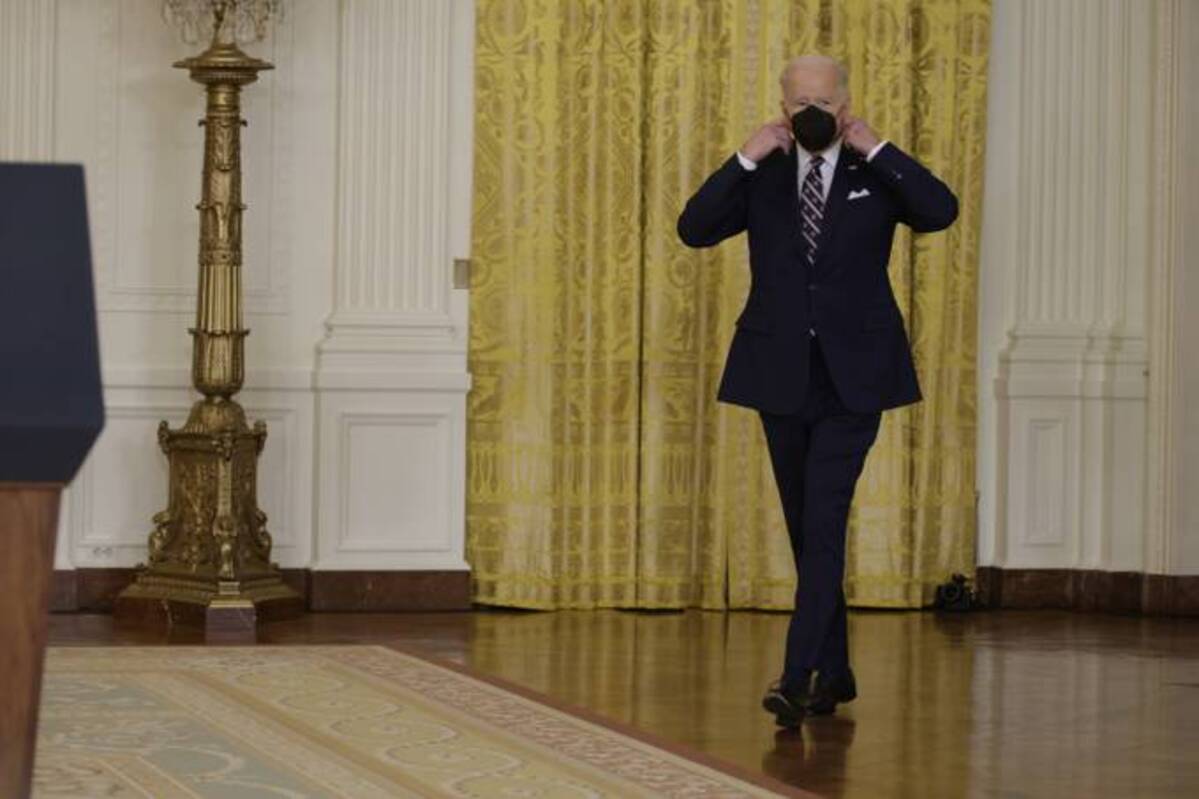 President Biden arrives to speak on Russia and Ukraine in the East Room of the White House on Tuesday. (Samuel Corum/Bloomberg News) | | | "Ports will have to apply for the newly announced money, which is not expected to be handed out until the fall, and is unlikely to help tackle inflation or shipping backlogs in the short term. But administration officials say the recent strains on supply chains have shown the need to invest in modernization at ports," Ian Duncan reports. | Biden administration suspends right of way for Alaska mining road advanced by Trump officials | | "The Interior Department said in a statement that the road proposal — which includes about 50 miles of Bureau of Land Management and National Park Service land — would cross the traditional homelands of Alaska Native communities including the Koyukon, Tanana Athabascans and Iñupiat peoples," Joshua Partlow reports. "In a federal court filing Tuesday, the administration asked the U.S. District Court for Alaska to send the permit approval back to the department so it can conduct a new environmental analysis. Interior said that it would suspend the right of way for the road while it carried out the new assessment 'to ensure that no ground-disturbing activity takes place that could potentially impact the resources in question.'" | Biden interviews at least three Supreme Court contenders | | The women include Judge Ketanji Brown Jackson, who has sat on the federal bench for nine years and has a background as a public defender; Judge J. Michelle Childs, a federal judge in South Carolina who is a favorite of House Majority Whip James E. Clyburn (D-S.C.); and Leondra Kruger, a justice on the California Supreme Court, Sean Sullivan, Seung Min Kim and Tyler Pager report. | | |  | The Donbas region, visualized | | | |  | Hot on the left | | Madeleine Albright: Putin is making a historic mistake | | "Mr. Putin's revisionist and absurd assertion that Ukraine was 'entirely created by Russia' and effectively robbed from the Russian empire is fully in keeping with his warped worldview. Most disturbing to me: It was his attempt to establish the pretext for a full-scale invasion," the former secretary of state writes for the NYT. "Should he do so, it will be a historic error." "Instead of paving Russia's path to greatness, invading Ukraine would ensure Mr. Putin's infamy by leaving his country diplomatically isolated, economically crippled and strategically vulnerable in the face of a stronger, more united Western alliance." | | |  | Hot on the right | | What sanctions against Russia can — and can't — achieve | | "Designating certain Russian oligarchs is already part of the sanctions package announced by the Biden administration, which also includes blocking two large banks, further restrictions on Russian sovereign debt, and halting the already-suspended Nord Stream 2 pipeline. But these measures alone are not powerful enough to constitute an immediate deterrent to Putin," Nate Sibley writes for the National Review. "The U.S. and its allies must now confound his expectations of Western weakness by inflicting crippling economic costs on Russia. The objective must be to ratchet unbearable financial pressure against the different factions within Russia's political and business elite, compelling them to move against their wayward leader and thereby keeping Putin distracted with rolling internal threats to his own survival. This will take time to bear fruit and cannot be treated as a silver bullet to address the immediate crisis — but it is a key part of any medium- to long-term strategy to counter Putin's revanchist campaign." | | |  | Today in Washington | | | The president does not have any public events scheduled for the afternoon. | | |  | In closing | | | We're just spitballing at this point, but what about a Wordle embargo? | | Seth Meyers | "From now on, Russia doesn't get the new Wordle until noon. Russian Wordle is very easy because it's always 'Putin.'" | | | | | | | | Thanks for reading. See you tomorrow. | | |




0 Comments:
Post a Comment