| Overnight in America, Russia attacked Ukraine in what President Biden called "premeditated war." We pulled some of the most-searched questions on the Internet about what's happening, figuring if a few thousand people have these questions, you probably do, too. Why did Russia invade Ukraine? We don't know exactly. Russian President Vladimir Putin has given several speeches this week, but they were filled with political attacks that seemed to justify an invasion that many foreign policy experts think he had already decided on. One theme Putin keeps coming back to: his perception of an incursion by the West, specifically through NATO, whose members surround Russia. Ukraine isn't a part of NATO, although it wants to be. Russia sees a NATO-member Ukraine as a threat to its own borders. 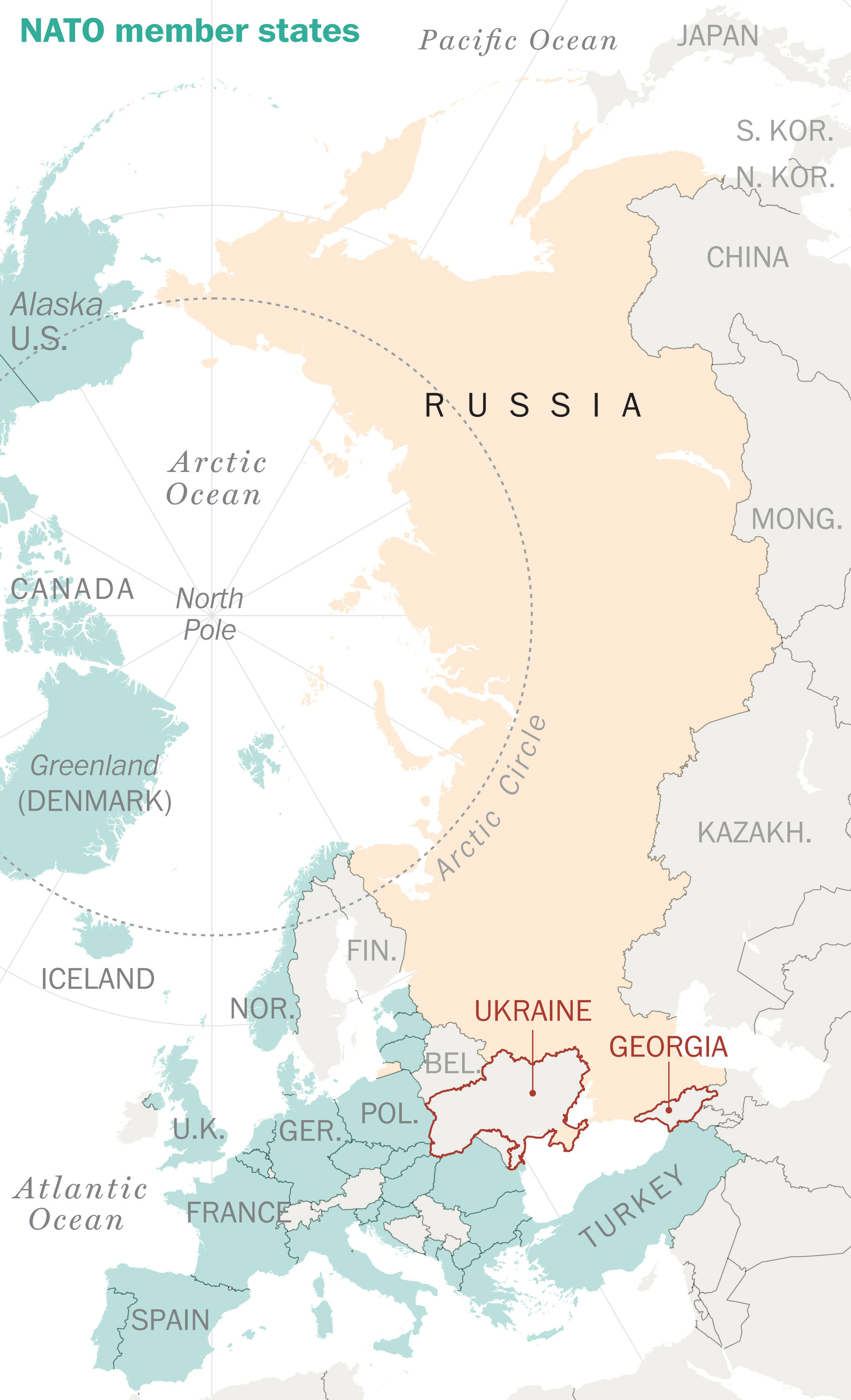 (The Washington Post) | Today Biden said he thinks Putin's ambitions don't stop at Ukraine: "He wants to, in fact, reestablish the former Soviet Union. That's what this is about." Biden has ruled out sending U.S. troops to fight in Ukraine. But what happens if Russians try to invade NATO member states nearby, such Latvia, Poland, Estonia or Slovakia? NATO membership says an attack on one is an attack on all; that could draw the United States into a war with Russia. What's the issue between Russia and Ukraine? Well, Russia attacked Ukraine unprovoked. So Ukraine's main issue is that Russia is invading it. "Listen to the voice of reason," Ukrainian President Volodymyr Zelensky said hours before Russia attacked. "The Ukrainian people want peace." Russia's issues with Ukraine, like we talked about above, are harder to pin down. If Biden's theory is correct, Russia wants to take over or bring into its sphere about a dozen independent countries that used to be part of the Soviet Union. 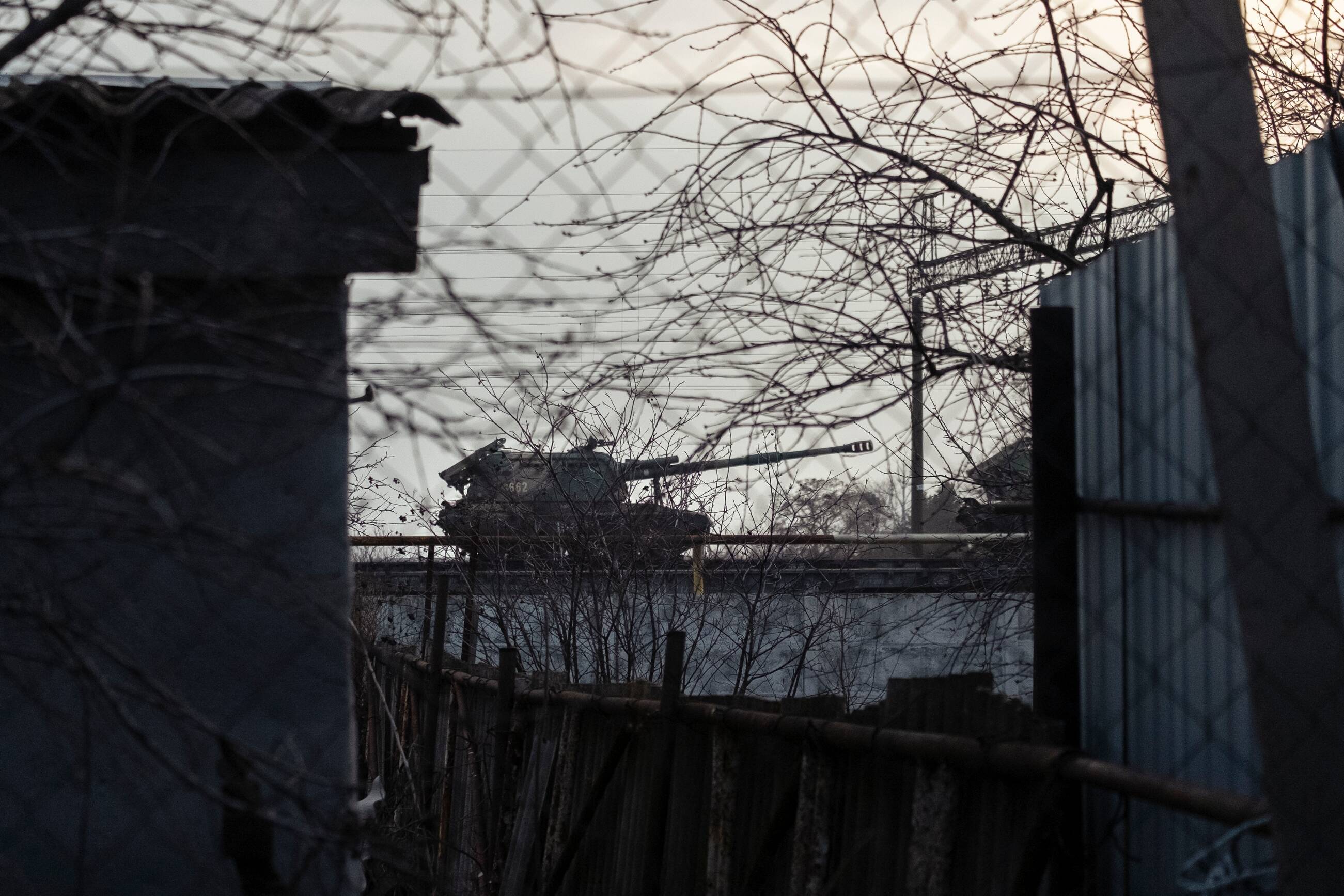 A Russian tank close to the border with Ukraine. (For The Washington Post/FTWP) | How many casualties could there be? Russia's attack on Ukraine could leave more than 50,000 civilians dead or wounded, U.S. officials warned lawmakers and European partners this month. This morning the British Defense Ministry tweeted that "heavy casualties have been suffered on both sides, although exact numbers are currently unclear." What are sanctions? They're an economic alternative to using military force to try to compel a country to do (or not do) something. There is a long list of economic punishments that the United States, especially working with other countries, can put together. In the United States, presidents or Congress can impose sanctions. Congress failed to put together a package, so Biden started off cautiously and has ramped up significantly alongside Europeans — so much so that no country as large as Russia has been hit with as many international sanctions, report The Washington Post's Ellen Nakashima and Felicia Sonmez. Biden has put sanctions on several Russian state-owned banks, a handful of Kremlin-connected elites and their families. He has also worked with Germany to temporarily stop a lucrative oil pipeline from Russia to Germany and blocked certain technology exports to Russia, which he said he hopes will hobble its military advancement. "This is going to impose severe cost on the Russian economy, both immediately and over time," Biden said. How will this affect the U.S. economy? Russia's attack on Ukraine is already having economic consequences in the United States and across the world. All major U.S. market indexes slumped — unrest is bad for them — though they recovered some ground as the day progressed. Russia is a major exporter of natural gas and oil, so the conflict has also sent gas prices soaring. And sanctions on Russia's economy and its ability to produce goods could make some things more expensive in the United States. "If we enter into a period of sustained conflict," Andrew Lohsen, a former State Department official now with the Center for Strategic and International Studies, said in an interview earlier this month, "then investments around the world will be affected, our 401(k) plans will take a dip, the price of fuel is going to go up." Russia could react with counter-sanctions, perhaps cutting off the United States from materials used to make cars and other big products, he said. How much Russian oil does the U.S. import? Quite a bit. As of 2021, Russia was the United States' third-largest oil supplier, behind only Canada and Mexico. "Russia supplied 7 percent of U.S. crude oil imports in late 2021 — a significant number," Forbes reports. Republicans have used the conflict in Ukraine to call for expanded oil and gas drilling in the United States, something Biden has opposed as he tries to bring down the country's greenhouse gas emissions. Is Ukraine a democracy? Ukraine has been making steps toward becoming a fully democratic country, but it's not there yet. The Economist's democracy tracker lists the republic as a "hybrid regime," one that's closer to a democracy than an authoritarian state. (That's one reason it hasn't joined NATO yet.) In 2019 it elected an actor who played Ukraine's president on TV and who campaigned on cleaning up the country's long-standing corruption. "It is a fledging democracy, with significant growing pains, largely the result of Russian pressure and interference in its affairs," writes Glenn Kessler for The Post's Fact Checker. Can I see some maps of Ukraine and Russia? Sure, here you go. Here's a zoom-out of the region. 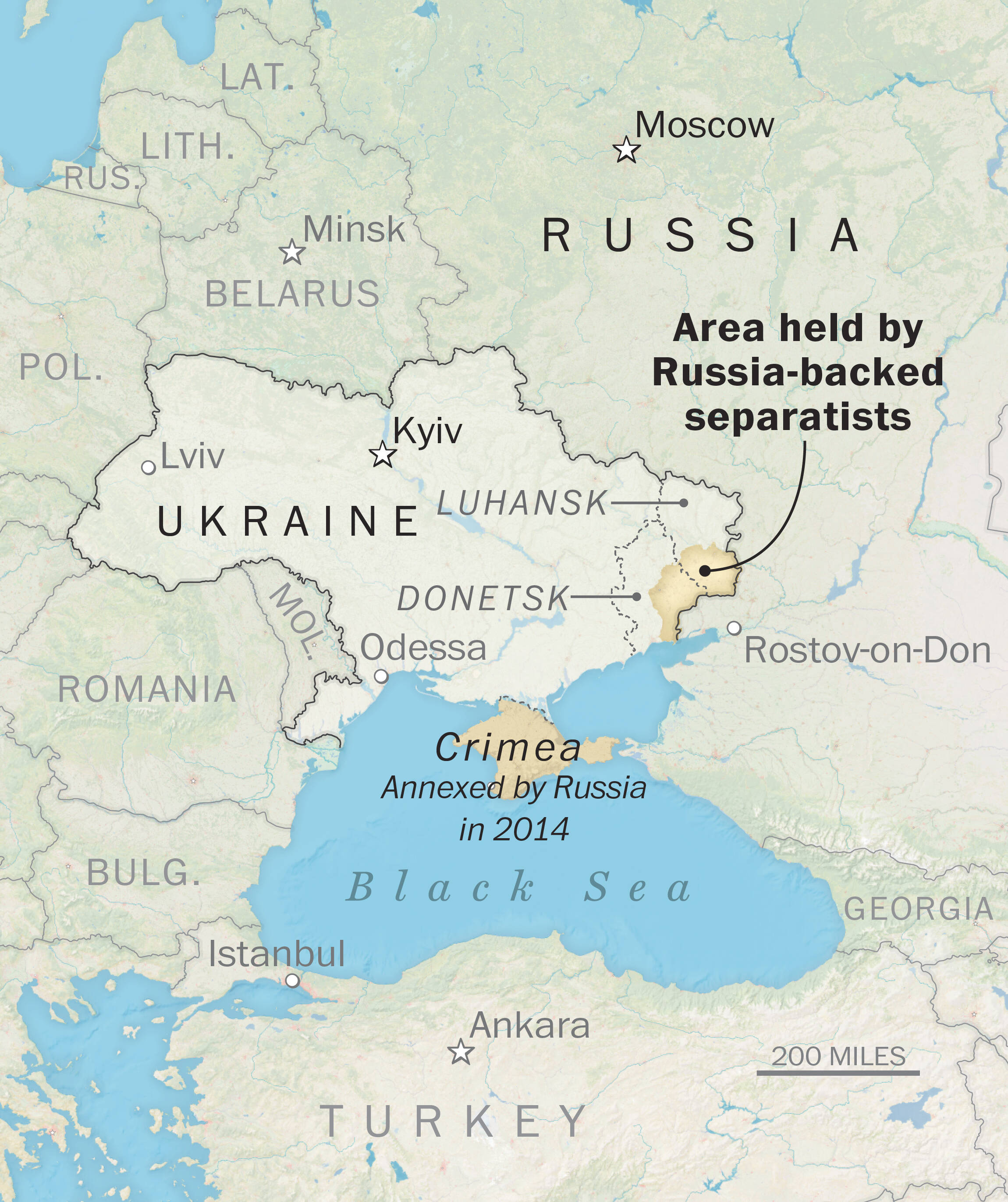 (The Washington Post) (The Washington Post) | And here's where we know fighting is taking place. 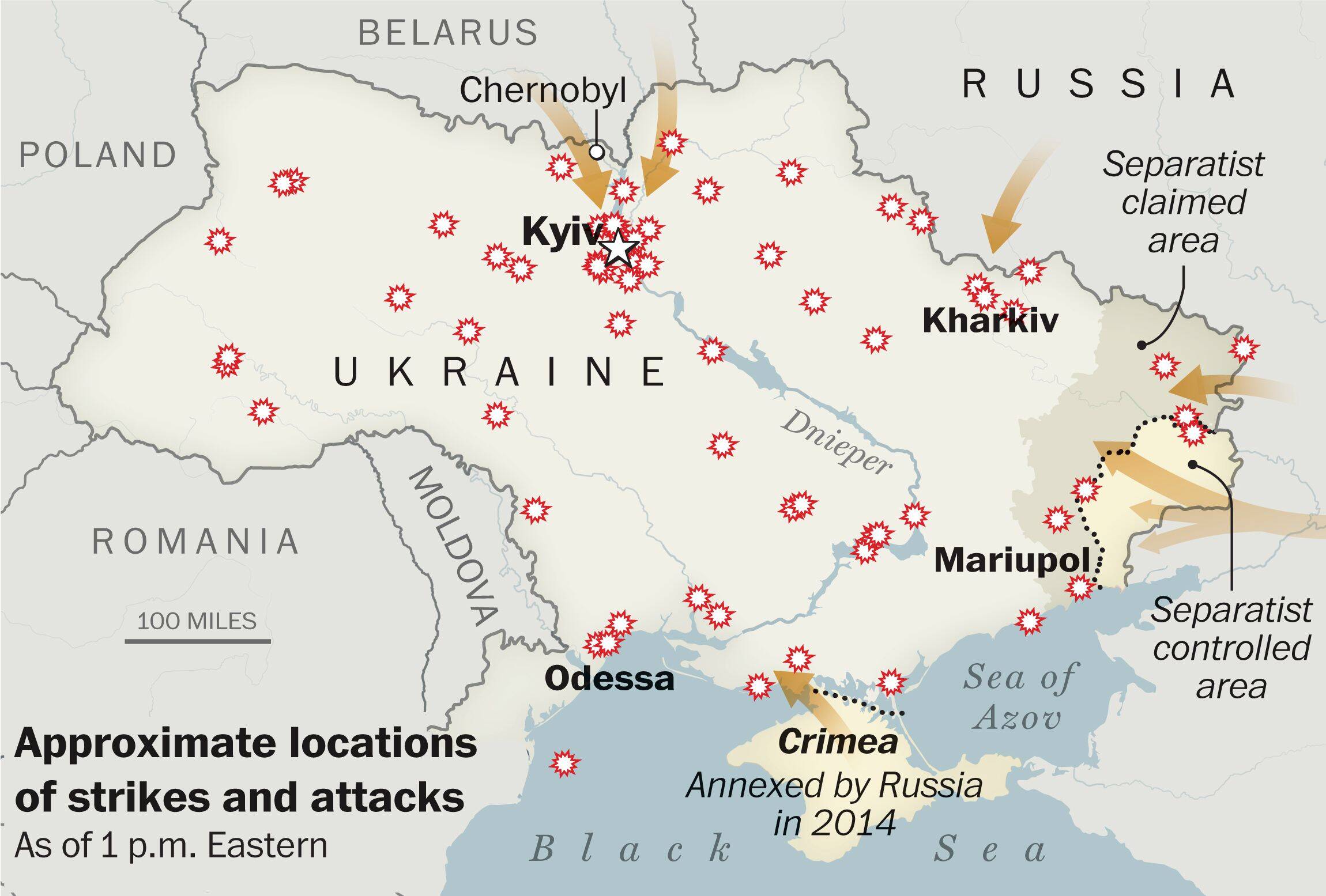 A map of strike and attack locations in Ukraine (The Washington Post) | What other questions do you have? | 





 Email
Email 

0 Comments:
Post a Comment