| Good morning, Early Birds. President Calvin Coolidge signed a bill 95 years ago today creating the Federal Radio Commission, the forerunner of the Federal Communications Communication. Send your wonkiest tips to earlytips@washpost.com. Thanks for waking up with us. | | |  | On the Hill | | Some lawmakers want Biden to go further on sanctions on Russia | 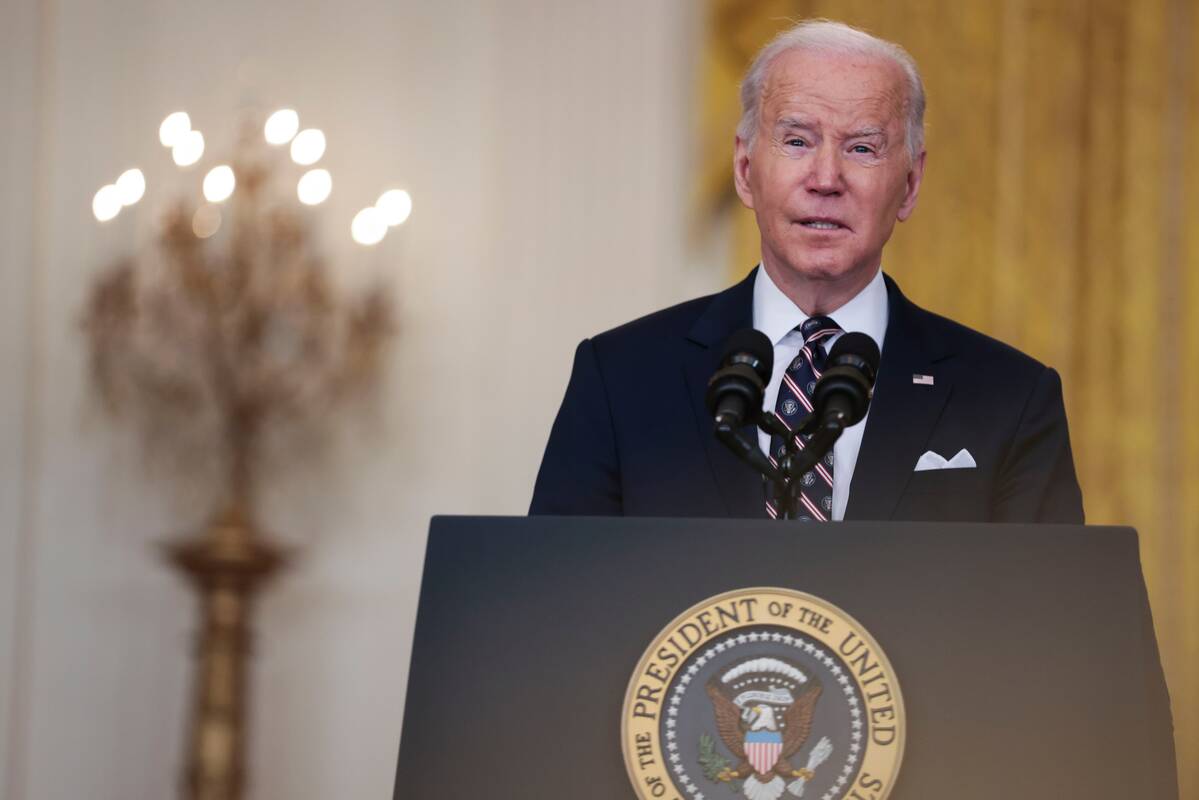 President Biden speaks about the Ukraine-Russia border crisis in the East Room of the White House in Washington on Feb. 22, 2022. (Oliver Contreras/For The Washington Post) | | | The Biden administration announced new sanctions on Russia on Tuesday in retaliation for Russian President Vladimir Putin ordering troops into separatist-controlled regions of Ukraine — but some lawmakers in both parties are pushing for him to go further. White House officials told reporters Tuesday that if Putin's invasion into parts of Ukraine continues, the U.S. is ready to take further action on larger Russian financial institutions and players. "I'm going to begin to impose sanctions in response, far beyond the steps we and our allies and partners implemented in 2014," Biden said on Tuesday, referring to punishment meted out after Russia's earlier incursion into Ukraine's Crimea region. "And if Russia goes further with this invasion, we stand prepared to go further." Overnight, early Russian reaction to the sanctions imposed by the Biden administration was defiant, with the country's ambassador to the United States, Anatoly Antonov, saying that the measures "cannot solve a thing" regarding Russia, our colleague Maria Paul reports. The initial tranche of economic penalties targeted two financial institutions, Russian sovereign debt, Russian elites and their family members. While a swath of lawmakers applauded Biden's action, the limited approach already has hawks and allies alike agitating for more painful measures as Putin has made clear he does not intend to stand down. "This strategy of imposing sanctions by waves — if I may call it this way — is something that can work if it continues in a sustainable way," Ukrainian Foreign Minister Dmytro Kuleba told reporters as he appeared alongside Secretary of State Antony Blinken Tuesday afternoon. | - "President Putin should not have a single minute when he starts to think that this is the threshold, the pressure reached its ceiling, and that he will not be punished anymore. This pressure should continue to be stepped up, and if that involves regular issuance of executive orders or new sanctions, we will be more than happy to see that," Kuleba added.
| | Lawmakers amplified their calls for more punitive sanctions on bigger targets and financial institutions over the course of the day: Sen. Bob Menendez (D-N.J.), the chairman of the Senate Foreign Relations Committee, told CNN in an interview that Biden should get rid of a waiver he issued last May that lifted sanctions on German entities involved with the now-mothballed Nord Stream 2 pipeline that connects Germany to Russia. He also called for an "overwhelming amount of [sanctions] now." | - "When is it that we're going to be clear to Putin that there are severe consequences for what he's doing? When he takes another bite after this bite?" Menendez asked.
| | "Kudos to the Germans," a senior Democratic Senate aide told The Early, referring to German Chancellor Olaf Scholz's move to halt the pipeline's certification. "The combo punch would have been for the U.S. to follow up that they were dropping the waiver on Nord Stream 2 sanctions which would have ended it forever. Biden alluded to it today but he did not say that explicitly — so that shows a bit of calibration and waffling." And Sen. Lindsay Graham (R-S.C.) tweeted Tuesday afternoon that Biden was "NOT seizing the moment," calling the first set of sanctions "woefully inadequate to deter Putin's efforts to redraw the European map and dismember a neighboring democracy." Graham told reporters he wanted to create an interagency task force to implement sanctions against Russian oligarchs: | - "I want to see cops go in and take apartments, fine art, seize yachts from a bunch of thugs and crooks," Graham said, according to The Hill's Laura Kelly and Morgan Chalfant. "I want to put money on the table to have more weapons for Ukraine to fight. I want more protection when it comes to cyber, and I want to go at this big, and I want to go at it hard."
| | All criticism… no solution?: The crisis has highlighted "growing divisions among Republicans on foreign policy that began with Donald Trump's presidency and continues after his electoral defeat as adherents to his 'America First' approach clash with the party's remaining hawks who for several decades rallied the party around the idea of projecting a muscular U.S. presence abroad," our colleague Paul Kane reports. | - "Some want stiffer sanctions and said they should have been put in place ahead of the invasion as a deterrent. Others question why the United States needs to be involved at all. Regardless, in their telling, it's Biden's fault," P.K. writes.
| | Months of threats of severe economic consequences from U.S. and European officials ultimately failed to deter Putin from invading Ukraine and with direct military action off the table, some analysts fear that "even the harshest sanctions may have limits," our colleague Paul Sonne reports. | - "When it comes to major military or national security issues, this type of coercion — punitive economic measures — rarely works," said Dursun Peksen, a political science professor at the University of Memphis who studies the effectiveness of sanctions. "I therefore remain skeptical that the Russian regime will be willing to make any significant concessions considering the significance they attach to the issue under dispute."
| | 'Issue salience': "The more importance a government assigns to the issue in question, the less likely it will be to respond to any kind of international pressure, he said, noting that Putin considers Ukraine central to Russia's national security and his country's foreign policy," Paul reports. | - Russia's ambassador to Sweden, Viktor Tatarintsev, waved away the impact of sanctions in an interview this month with the Swedish newspaper Aftonbladet. He said that the sanctions Russia has already faced have had a positive impact on the Russian economy and the agricultural sector. "We have become more self-sufficient and have been able to increase exports…We do not have Italian or Swiss cheeses, but we have learned how to make the same good Russian cheeses according to Italian and Swiss recipes," Paul reports.
| House announces hearing date for congressional workers' right to unionize | 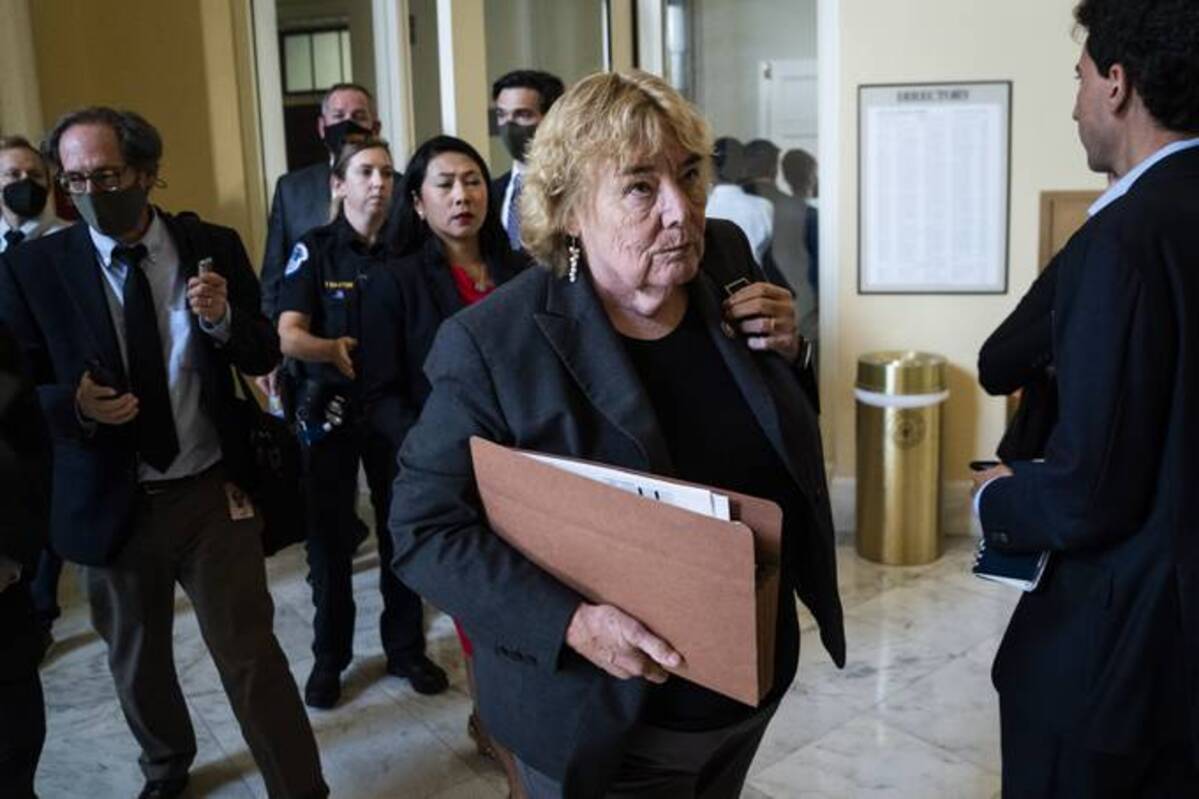 Rep. Zoe Lofgren, D-Calif., departs with other members of the House select committee on the January 6th attack after their first hearing with Capitol Hill police witnesses on Capitol Hill on Tuesday, July 27, 2021 in Washington, DC. (Photo by Jabin Botsford/The Washington Post) | | | Unionization update: Congressional aides seeking to unionize are getting the hearing they've been pushing for. The House Administration Committee "will convene a hearing soon to move the House forward on recognizing congressional workers' right to unionize," Rep. Zoe Lofgren (D-Calif.), the committee's chairman, said in a statement Tuesday evening. The congressional staffers behind the unionization push griped last week that Lofgren was taking too long to hold a hearing. Lofgren countered that she wanted to give the Office of Congressional Workplace Rights a chance to review the regulations outlining how Hill aides could unionize that it drafted more than two decades ago. (Congress never adopted the measures.) The office signed off on the rules on Tuesday and urged Congress to adopt them. | | |  | The campaign | | What does the crisis in Ukraine mean for the Biden administration? | | What the pollsters say: Will the unfolding crisis in Ukraine help or hurt the Biden administration's political fortunes? It's too soon to tell, John Anzalone, one of Biden's lead pollsters during the 2020 campaign, said Tuesday evening event at Harvard's Institute of Politics. "When you go back to George W. Bush going into Iraq, it all looked great at the beginning," Anzalone said. "But at the end of the day, you could say it tarnished his presidency and is one of the main reasons why there was a Democratic president following him." | | |  | In the agencies | | How Russia's advance on Ukraine is rattling Americans | 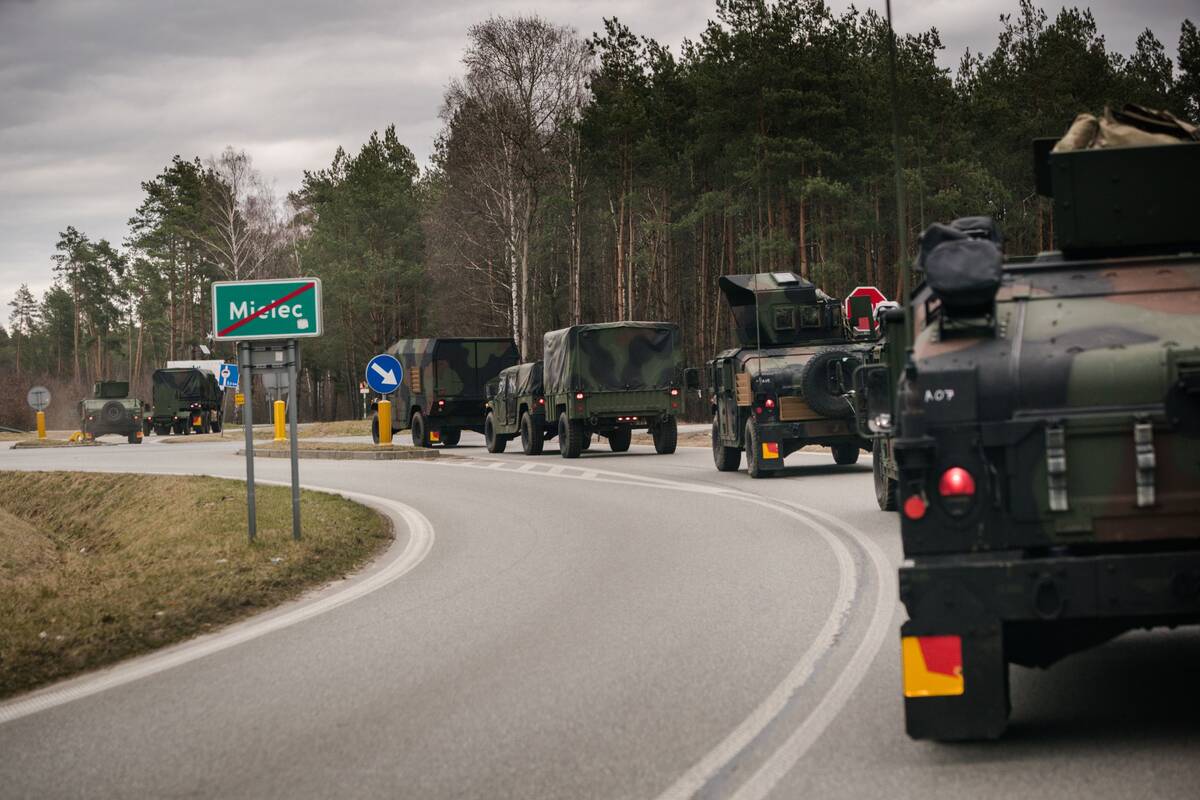 U.S. convoy on the road in Mielec, Poland, on Feb. 20. (Wojciech Grzedzinsk/The Washington Post) | | | 'A shock to the American system': "Russia's advance on Ukraine is a different kind of conflict from what Americans have witnessed through most of the past half-century," our colleague Marc Fisher writes. "It's a return to a kind of aggression — one country seeking to take over another — that many American policymakers and voters believed had become passe. And it's taking place in a region, Eastern Europe, that in important ways had receded from many Americans's mental maps of the world's potential conflict zones." | - "The prospect of ground warfare and a brutal assault on a sovereign nation at the edge of America's European alliance is raising worries about whether the United States pivoted too sharply to Asia and the Middle East in recent decades; whether America's historical bonds with Europe remain strong enough to protect U.S. interests now; and whether U.S. strategists focused too heavily on the new forms of warfare that have dominated recent international clashes, including cyberwar, drone assaults and targeted assassination."
- "Putin's 'invasion' of Ukraine … is taking place 5,000 miles from Washington. It can be viewed as a largely regional conflict, a violent expression of the Russian leader's ahistorical contention that, as he put it in a bellicose article last summer, 'modern Ukraine is entirely the product of the Soviet era' and has no independent legitimacy."
- "But Russia's move to recognize two Russian-backed separatist enclaves within Ukraine as independent countries and the subsequent move of Russian forces into those areas of Ukraine has rocked Western Europe and threatens to hit Americans where they live — in the form of possible surges in energy prices, rattled financial markets and the possibility of cyberattacks on American institutions in response to U.S. economic sanctions against Russia."
| | |  | From the courts | | Biden in final stages of Supreme Court selection process, interviews three candidates | | 👀SCOTUS watch: "Biden is in the final stages of making his first nomination to the Supreme Court — having completed interviews with at least three leading contenders — and West Wing officials have begun advising outside allies on how to defend the nominee against potential attacks," people briefed on the process told our colleagues Sean Sullivan, Seung Min Kim and Tyler Pager. | - "One of the interviews was with Judge Ketanji Brown Jackson, who has sat on the federal bench for nine years and has a background as a public defender … Another was with Judge J. Michelle Childs, a federal judge in South Carolina who is a favorite of House Majority Whip James E. Clyburn (D-S.C.), an influential Biden ally. Neither interview had been previously reported. Biden also interviewed Leondra Kruger, a justice on the California Supreme Court."
- "With a rollout coming as soon as this week, West Wing officials have begun telling supporters to prepare for an imminent announcement … Three of the people briefed on the selection process said they expected Biden would select Jackson, who emerged as a front-runner soon after Justice Stephen G. Breyer announced his retirement in late January."
| | |  | The Media | | | |  | Viral | | | Memes of mass humiliation | 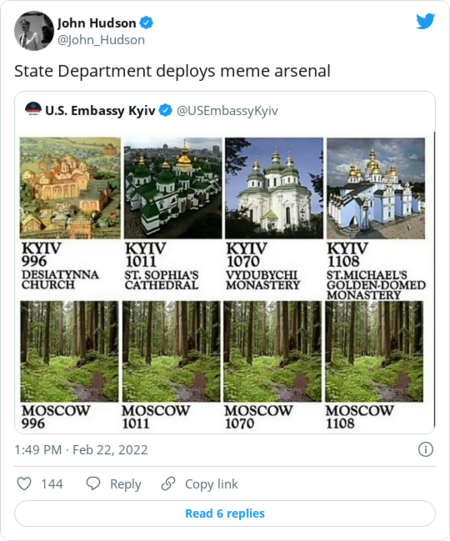 | | | | | | AM/PM | | Looking for more analysis in the afternoon? | | | | Weekday newsletter, PM |  | | | | | | |


0 Comments:
Post a Comment