| Things are really escalating today in Ukraine. Here's an update. What's happening: Russia has started to invade Ukraine, according to President Biden. For weeks it had been massing troops along the border, and it has now sent troops into two rebel-held parts of the country, declaring them independent of Ukraine. That constituted "the beginning of a Russia invasion of Ukraine," Biden said. 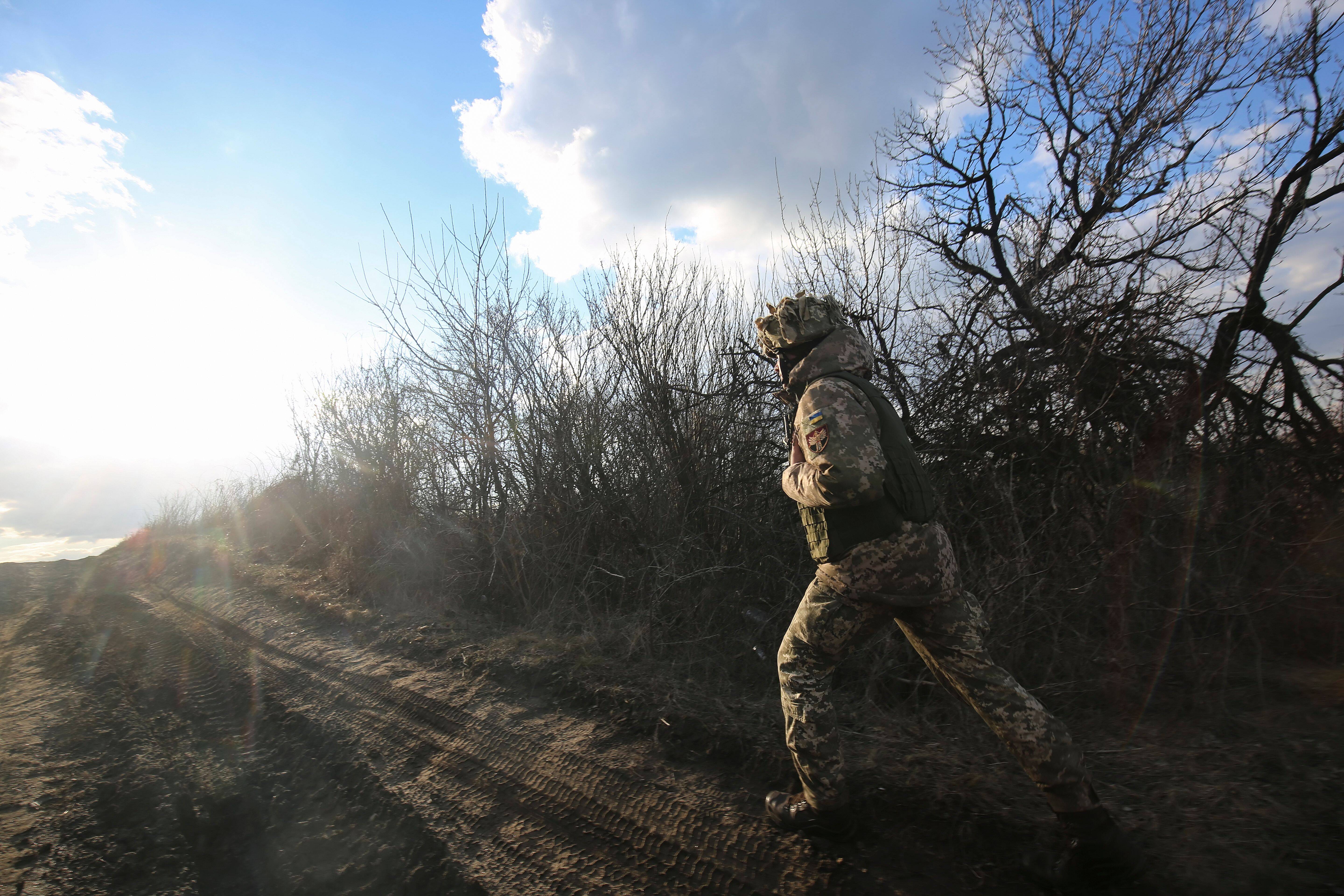 A Ukrainian service member on the front lines in eastern Ukraine on Monday. (Alisa Yakubovych/EPA-EFE/Shutterstock) | What could happen next: It's possible Russia could try to annex the entire country. Today Biden noted that Russia has set up field hospitals and brought blood supplies to the edge of Ukraine. "You don't need blood unless you plan on starting a war," he said. How the U.S. is responding: Biden has ruled out sending any U.S. soldiers to fight in Ukraine. So his other alternative is to issue sanctions on Russian elites and businesses. He said the United States is imposing sanctions on two of Russia's largest banks, cutting it off from getting loans from the West, and on Russian elites and their families. And he said there's more to come. The politics of this: Some Republicans are criticizing Biden for not imposing stricter sanctions sooner. But overall, there's bipartisan agreement that Biden is uniting NATO and the West against Russia the best he can. Sen. Lindsey Graham (R-S.C.) is one of the more hawkish members of Congress, and on Tuesday he urged Biden to go after Russian oligarchs via sanctions, which it appears Biden is doing. "That's one thing that I think is very bipartisan," Graham said. "I want to see cops go in and take apartments, fine art, and seize yachts from a bunch of thugs and crooks." Why this matters for Americans: Ukraine is constantly pulled between the East and the West. It recently looked as if it was moving toward the West; Ukrainians elected a political novice who promised to crack down on corruption. Now Russia could forcibly pull it to the East. And that could have global implications. If Russia takes over Ukraine, it will have basically ignored international law and gotten away with it. "He wants to show that the strong can do whatever they want to weaker neighbors," writes Washington Post columnist Max Boot. This is also a test of American power. "The world is watching," Senate Minority Leader Mitch McConnell (R-Ky.) said in a statement, warning that free nations around the globe could be at risk from bad actors. "Our allies, our adversaries, and neutral countries will all judge the West by our response — and plan their futures accordingly." Also more practically, oil prices could spike and stocks could drop and inflation could keep going as a result of war abroad. "Defending freedom will have a cost," Biden warned Americans on Tuesday. Some terms to know to follow all this Sanctions: An economic alternative to military force to try to compel a country to do (or not do) something. There is a long list of economic punishments that the United States, especially working in concert with other countries, can put together. It includes everything from restricting imports or exports, to cutting off foreign aid, to targeting leaders and prohibiting Americans from doing business with these countries. Right now the United States has sanctions going against more than a dozen countries, Russia included. Nord Stream 2 pipeline: It's a big pipeline that runs from Russia to Germany and is all ready to go, potentially doubling the flow of Russian gas to Germany. Biden has been trying to use the pipeline as leverage against Russia, saying the West would "bring an end to it" if Russia tries to invade. On Tuesday, Germany stopped the project. It's one of the strongest moves the West has made so far to punish Russia for its actions in Ukraine. But The Post's Aaron Blake asks: Is this actually the end of the pipeline as Biden promised or just a suspension of it? 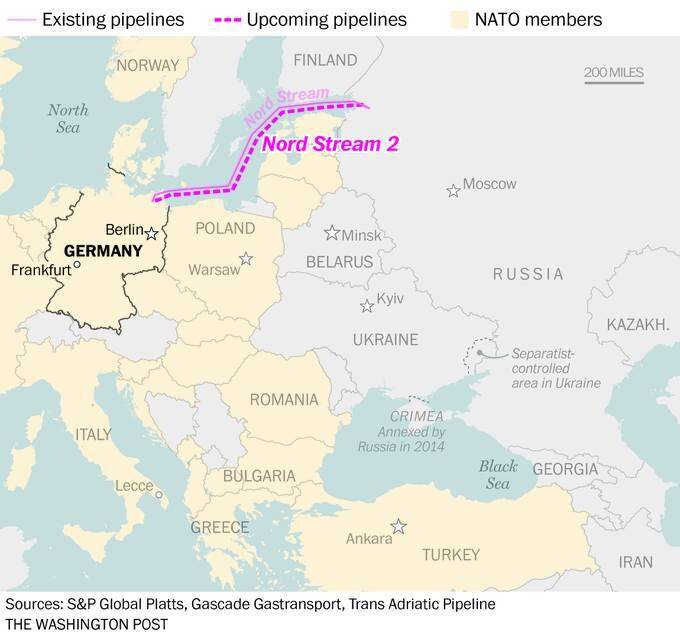 | Donbas region: An area in eastern Ukraine that borders Russia that has since 2014 been divided into separate territories under different control: the Kyiv-controlled parts and the Russian-backed separatist Donetsk and Luhansk "people's republics." The separatists control about one-third of the area, reports The Post's Sammy Westfall. But on Monday, Russian President Vladimir Putin ordered Russian troops into the separatist regions and said he recognized their independence. Many thought that was an escalation toward war. Biden cited that Tuesday for why he's upping sanctions: "Who in the Lord's name does Putin think gives him the right to declare new so-called countries on territory that belongs to his neighbors?" 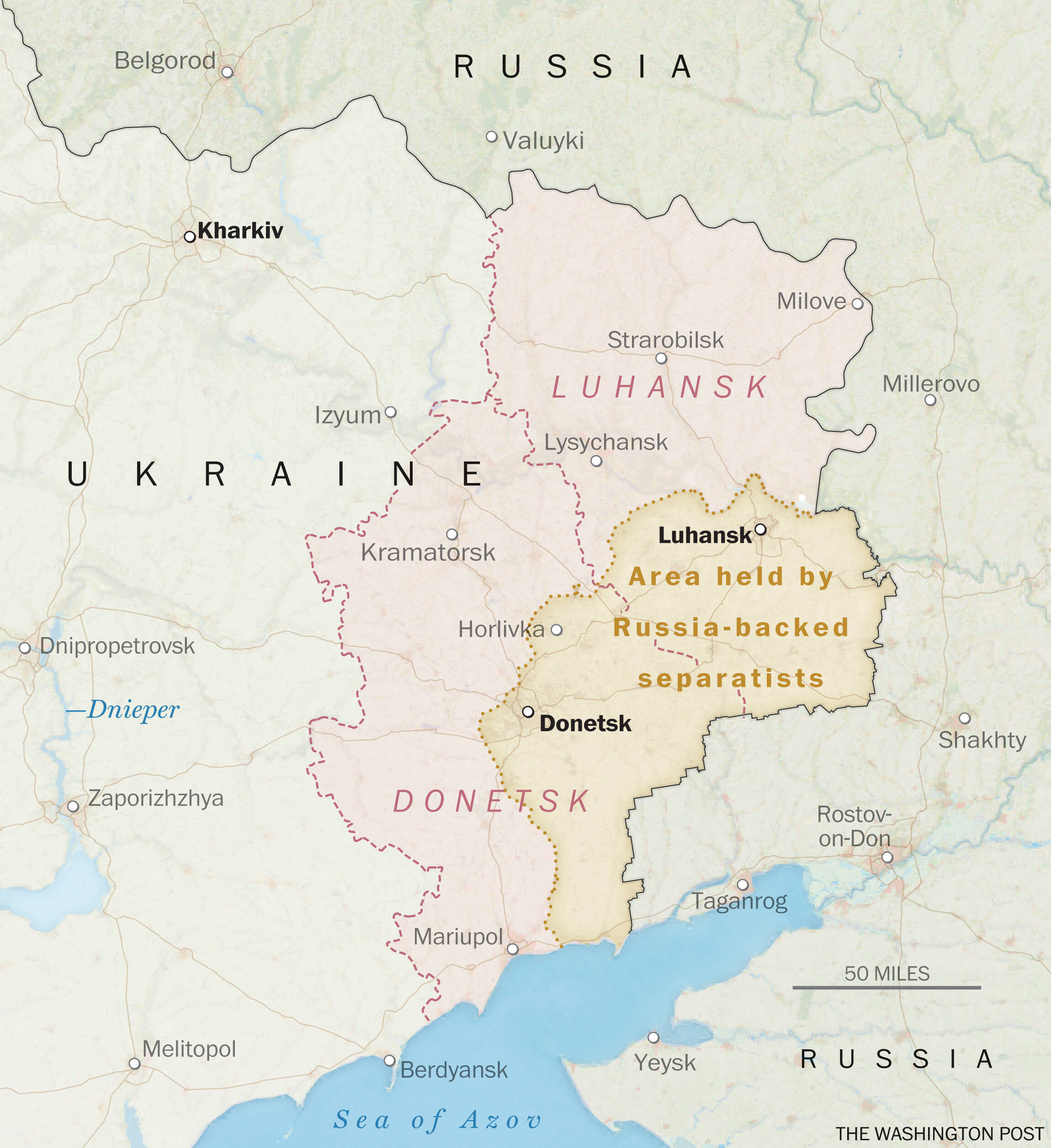 (The Washington Post) | NATO: The North Atlantic Treaty Organization promises that if one country is attacked, all others respond. Ukraine isn't a part of it yet, and Russia really doesn't want it to join. If you're Russia and you feel threatened by NATO, well, this map underscores why. 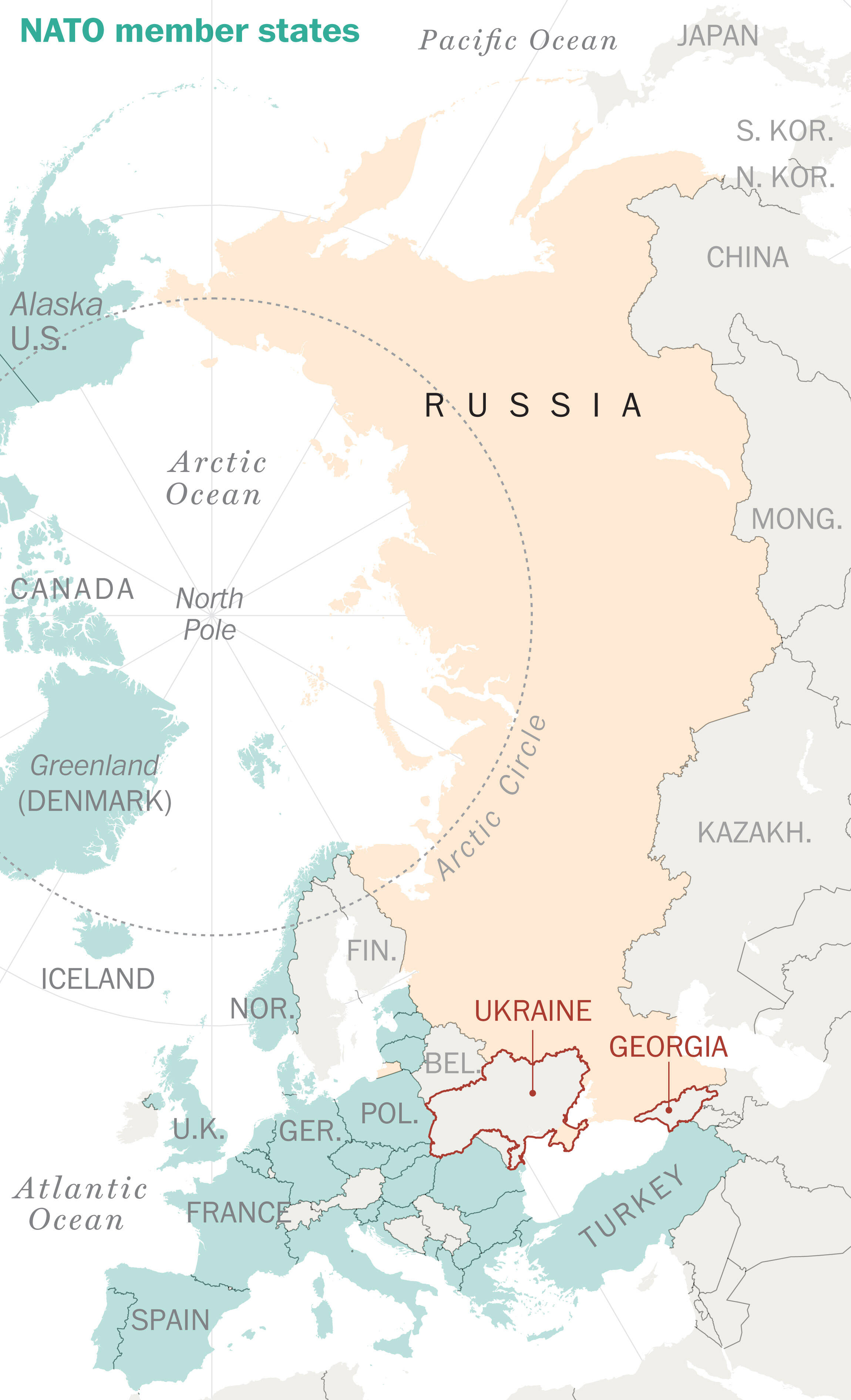 (The Washington Post) | | 





 Email
Email 

0 Comments:
Post a Comment