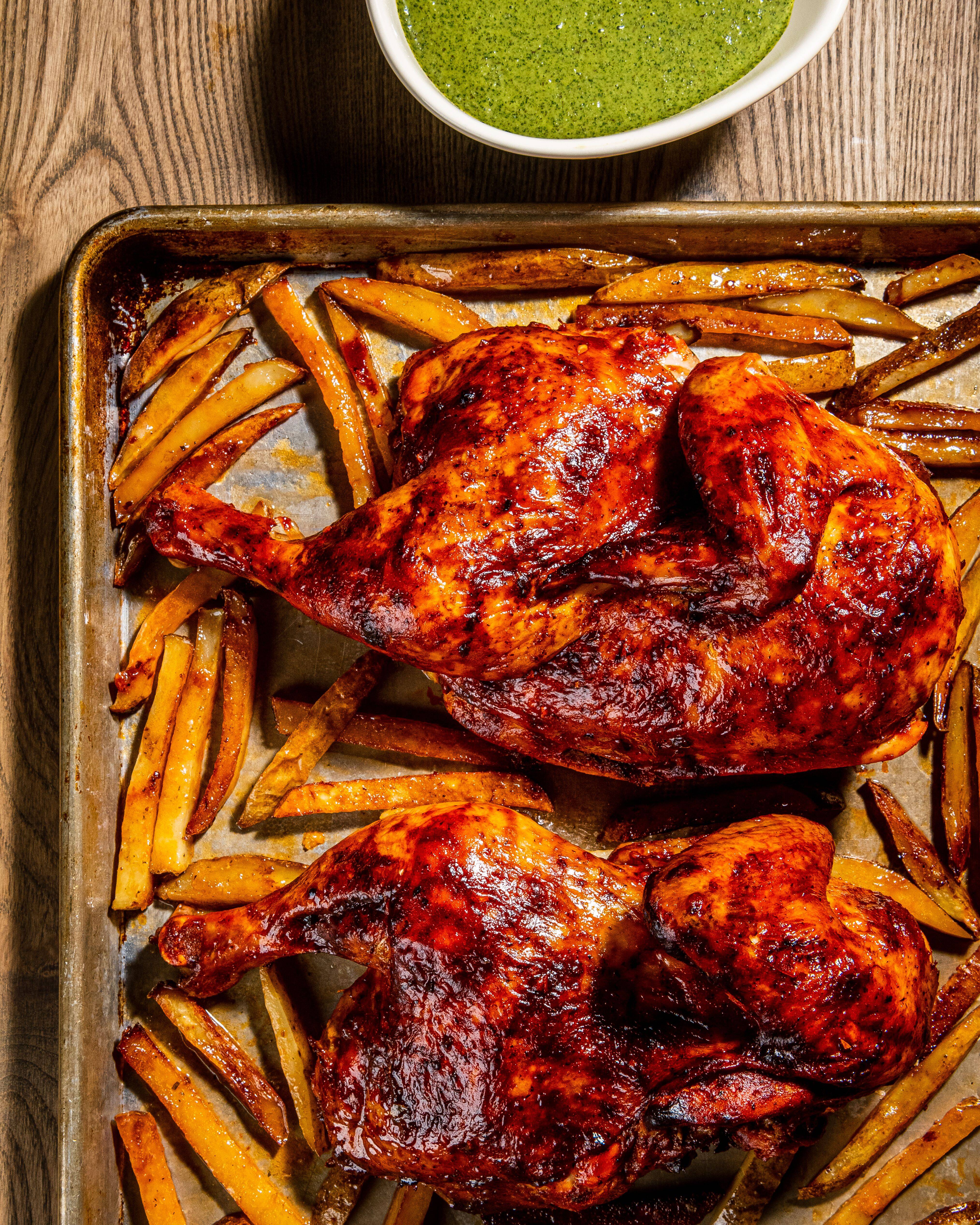
| Did a friend forward this to you? Sign up here. A la brasa "I guess it's a compliment that imitators of Peru's famous rotisserie chicken are everywhere," chef Ricardo Zarate writes in his book, "The Fire of Peru." "Problem is, unless you happen to have a rotisserie grill, it can be difficult to mimic the slowly rotating spit that gives the chicken that almost black, fantastically charred crust that seals in the natural juices so the chicken doesn't dry out." In fact, I'd say that there's no way to make true pollo a la brasa — unless you own a rotisserie contraption for your oven or grill — though there are ways to capture the same combinations of flavors. If you've ever been to a restaurant that serves pollo a la brasa, you know the garlicky, salty and specifically savory flavor of Peruvian-style rotisserie chicken. And you've likely seen the way chicken roasting on a spit against a steady flame can turn simultaneously succulent and crisp. Earlier this year, I was thinking of my first taste of pollo a la brasa. It was at the appropriately named Pollo a la Brasa in Los Angeles, a famous stop where the smoke rises high into the sky every afternoon, and pickup trucks regularly dump firewood near the shop's back door. The loud thwack! of cleavers cutting cleanly, hitting wooden boards soaked in meat juices punctuates the usually jovial atmosphere. The menu is simple: Chicken, fries, salad, sauce. Burnished as a well-baked loaf of bread, the deeply savory crust on a piece of pollo a la brasa gives way to tender meat. Its drippings soak into the fries that go on every plate — and they even enhance the forgettable green salad next to them. At every pollo a la brasa spot I've been to there is also a sauce, yellow or red or — my favorite — green with herbs and chiles and lime juice. Aji serves as a pungent salve for all the rich meat and potatoes, and a dressing that makes even the tired leaves of romaine and iceberg worth eating. There's a recipe for pollo a la brasa in Zarate's book, which was written with Jenn Garbee. But it's a complex affair, involving a sous-vide-like process followed by a sear on a hot grill to give the chicken that signature lick of fire. Here, I borrowed elements from Zarate's marinade and seasoning rub — a blend of soy sauce, vinegar, hot sauce, cumin and Peruvian mint — and his method of splitting the chicken fully in half so that it cooks evenly. But then I turned this riff on the Peruvian classic into a sheet-pan meal, with potatoes that sizzle in the juices of the chicken, turning french fry-like in the process. Dip each forkful in the punchy aji verde, a creamy sauce that takes minutes to make in a blender and pairs well with so many savory dishes, whether they were roasted on a spit or not. (Food on a stick suspended over fire is one of humankind's oldest cooking techniques, but back in 2012 my colleague Tim Carman dug up the surprising history of the multi-spit rotisserie machine, and it's worth a read!)  | Today's recipe | 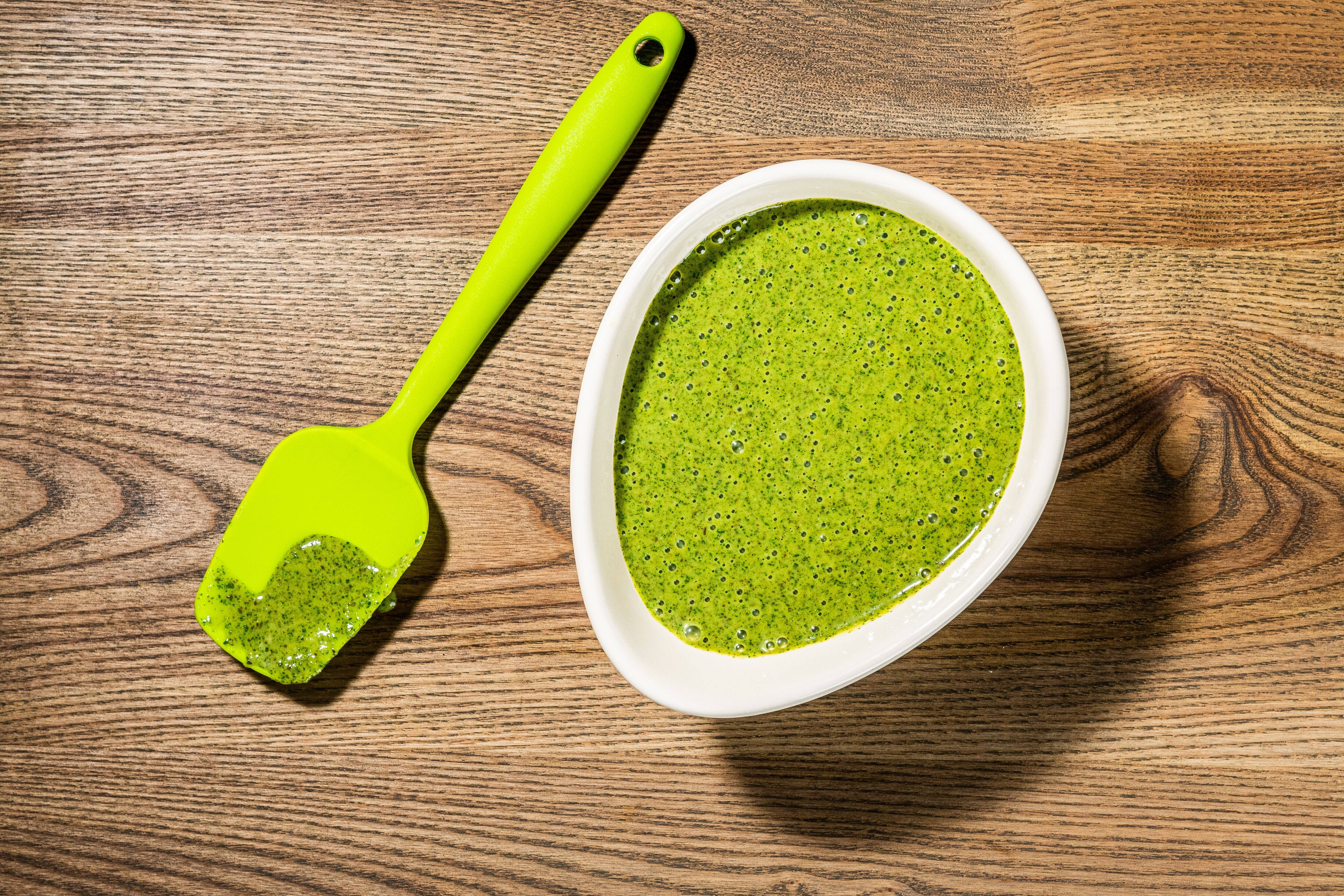 Photos by Rey Lopez for The Washington Post; food styling by Lisa Cherkasky for The Washington Post | Pollo a la Brasa With Aji VerdeI've offered many suggested substitutions within the recipe, below. I really like the way rosemary works in the marinade, compared to the traditional huacatay, or Andean black mint paste. But if you've never tasted the fiery flavor of aji panca, it's worth seeking out. Here are a few more ways to tweak this recipe: - Not a meat eater? >> Try this with a head of cauliflower, cleaved in half. Supplement the meal with a pot of beans for additional protein.
- If you are out of potatoes >> you could roast the chicken over other root vegetables, cut into similarly sized pieces, or winter squash.
- Can't have chiles? >> Skip them.
- Dislike mayonnaise and dairy products? >> Use half a ripe avocado in the sauce instead.
- Not into cilantro? >> Use fresh mint, or a combination of tender herbs, instead.
Where to buy: Aji panca, aji amarillo and huacatay, can be found as jarred pastes at Hispanic markets and online. Storage: Leftovers may be refrigerated in covered containers for up to 4 days. Make Ahead: The chicken may be marinated overnight, if desired. NOTE: To cut a chicken in half, using kitchen shears, cut through its backbone, then around through its breast bone until the two halves are separate. You may also ask a store butcher to do this. Want to save this recipe? View it on Voraciously here and click the bookmark icon below the serving size at the top of the page to add it to your Reading List. For easy printing and scaling, view this recipe in our Recipe Finder. Servings: 4 to 6
Active time: 20 mins
Total time: 1 hour, plus optional marinating time IngredientsFor the chicken - 4 tablespoons olive or vegetable oil, divided
- 4 cloves garlic, minced or finely grated
- 2 tablespoons soy sauce, tamari or liquid aminos
- 2 tablespoons red wine vinegar
- 1 tablespoon aji panca paste or aji amarillo paste (may substitute with another chile or hot sauce, such as sambal oelek, sriracha or Valentina)
- 2 teaspoons jarred huacatay paste (may substitute with 1 tablespoon finely chopped fresh rosemary leaves)
- 1 teaspoon ground cumin
- 1 (4-pound) whole chicken, cut in half through the breastbone and backbone (see NOTE)
- 3 large russet potatoes or sweet potatoes (2 1/2 to 3 pounds total), cut into 1/2-inch thick fries
- 1/4 teaspoon fine sea salt or table salt
For the aji verde - 1/3 cup mayonnaise, Greek yogurt, crumbled queso fresco or feta
- 1 ounce fresh cilantro leaves and tender stems (about 1/2 bunch), roughly chopped
- 1 tablespoon jarred huacatay paste (may substitute with 1/2 ounce fresh mint leaves and tender sprigs)
- 4 cloves garlic
- 1 serrano or jalapeño, stemmed, deseeded and roughly chopped
- 1 tablespoon aji amarillo paste (optional)
- 1 teaspoon ground cumin
- Finely grated zest and juice of 1 lime
- Fine sea salt or table salt
Steps1. Make the chicken: In a large bowl or resealable bag, mix together 2 tablespoons of oil, the garlic, soy sauce, vinegar, aji panca or other chile paste or sauce, huacatay paste or rosemary, and cumin. Add the halved chicken, turning to coat it on all sides and in all crevices with marinade. Set aside while you prepare the potatoes — or cover the bowl or seal the bag and refrigerate overnight. 2. Position a rack in the middle of the oven and preheat to 375 degrees. 3. Pour the remaining 2 tablespoons of oil on a large, rimmed baking sheet. Add the potatoes and toss until well coated. Lightly season with salt. Shake the excess marinade off the chicken and place it, breast-side up, with the legs facing the rear of the oven, atop the potatoes; reserve the marinade. Roast for 35 minutes, then remove the baking sheet from the oven. Using tongs, turn the exposed potatoes so they brown evenly on all sides. Brush or spoon the remaining marinade evenly over the chicken. 4. Increase the oven temperature to 400 degrees, and roast chicken for an additional 10 to 15 minutes, or until well browned and an instant-read thermometer inserted into the thickest part of the thigh reads 165 degrees. Let the chicken rest for 10 minutes before serving. 5. Make the aji verde: To a blender, add the mayonnaise, yogurt or cheese, cilantro, huacatay paste or mint, garlic, serrano or jalapeño, aji amarillo paste, if using, cumin, lime zest and juice, and puree until smooth, stopping to scrape down the sides of the jar as needed. Taste, and season with salt, if desired. 6. Serve the warm chicken and potatoes, family-style, with the aji verde on the side. From staff writer G. Daniela Galarza; pollo a la brasa marinade adapted from "The Fire of Peru" by Ricardo Zarate and Jen Garbee (Houghton Mifflin Harcourt, 2015). Nutrition information per serving (based on 6): Calories: 785; Total Fat: 51 g; Saturated Fat: 11 g; Cholesterol: 172 mg; Sodium: 834 mg; Carbohydrates: 36 g; Dietary Fiber: 5 g; Sugars: 2 g; Protein: 44 g.  | Dessert | 🍪 Cookie of the Day: Rum Balls.
🎧 "All I Want for Christmas Is You" by Mariah Carey.
📺 A crackling fireplace.
📖 "What Kwanzaa Means to Black Americans — Now & Always" by Kayla Stewart in Food52.
👀 This dog in a Santa hat.
🗣 If you liked this newsletter, please forward it to a friend! |



 Email
Email 


0 Comments:
Post a Comment