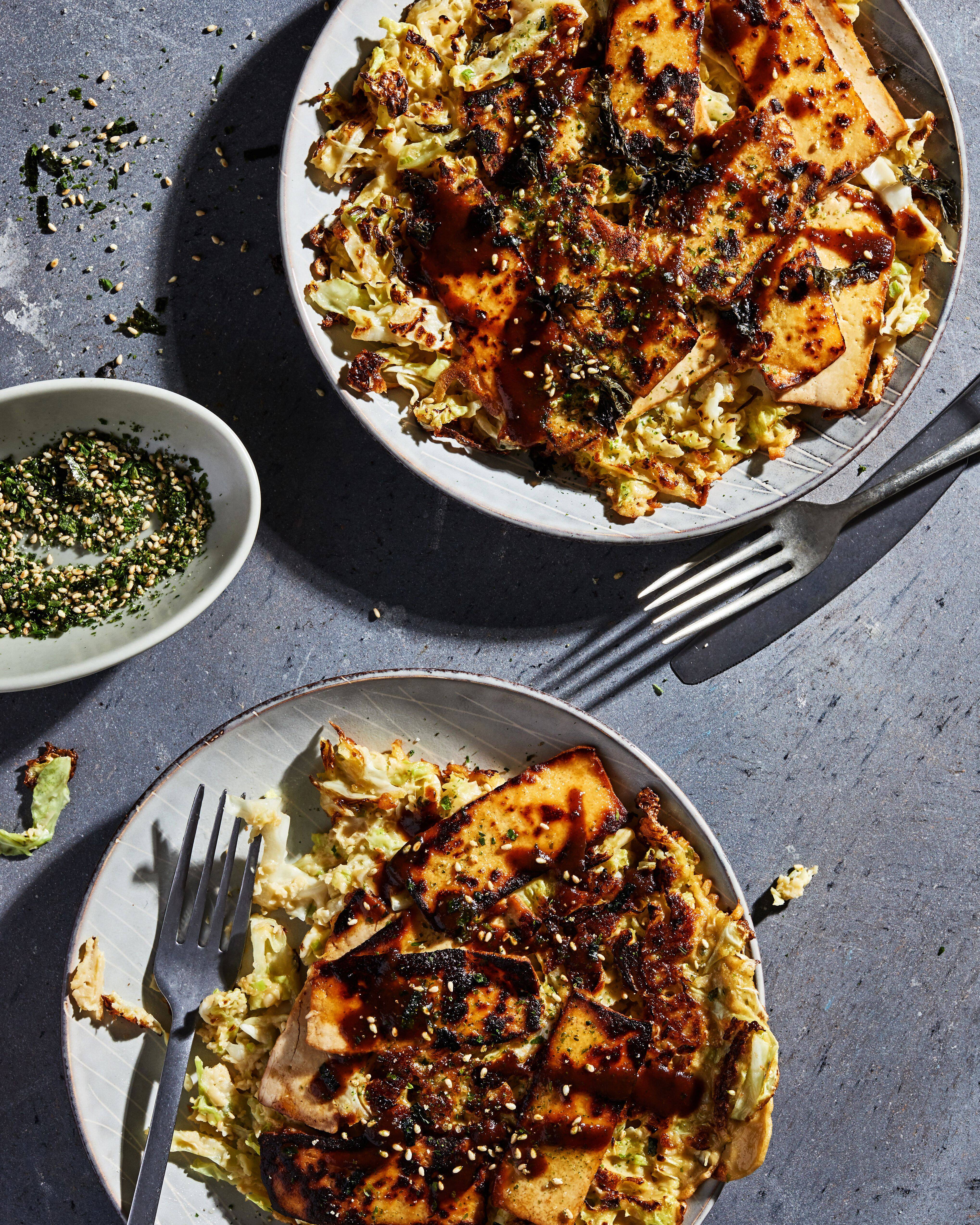
| 📣 Introducing the Eat Voraciously survey! Here's your chance to tell me what you want to see more of in this little newsletter. 📣 Say it with me: Okonomiyaki A couple of months ago, we celebrated cabbage — what I like to call the Crunchwrap Supreme of vegetables — by roasting it, frying it and simmering it in soup. One recipe I didn't get to spotlight that week but wanted to? Okonomiyaki, the ultimate cabbage pancake. That's dinner tonight, thanks to a recipe that came to The Post a few years ago from the U.K.-based cookbook author Kimiko Barber's "Cook Japanese at Home." It's a fairly straightforward example of the genre: A simple batter, seasoned with ginger and soy sauce, holds together a mass of shredded cabbage and scallions. A thick sauce, drizzled on top before serving, adds a bold umami finish. What I love about Barber's recipe is that it has so few ingredients. But the beauty of okonomiyaki is that it's whatever you want it to be. To learn more about its history and regional styles, I chatted with chef and restaurateur Daisuke Utagawa, of D.C.'s Daikaya. "When you go back to the roots of okonomiyaki, it depends on where you draw the line and call it okonomiyaki. Just like other foods in Asia, if you start tugging at the threads, it can go really far back, as far as 500 years ago," Utagawa says. Pancake and pancake-like griddle cakes containing vegetables and meats have been made in Japan since antiquity, Utagawa says. But true okonomiyaki traces back only to the Taishō period (1912-1926), when Western culture started to seep into daily Japanese life, he says. "Okonomiyaki has more substance. It always has cabbage, usually pork or other proteins, and it's dramatic and attractive. It became a thing not to make it at home, but something people sought out at festivals." In Japan, each shrine has its own festival day, a time when families visit and eat at the food stalls that are set up outside on the roads leading to the shrine. To stand out, food sellers had to make sure their food looked and smelled amazing. In the early 1900s, okonomiyaki sellers set themselves apart by dousing their pancakes with a pungent brown sauce. It was based on a sauce recently introduced to the country by way of England — Worcestershire. "That smell, of the brown sauce hitting the hot griddle, caramelizing and burning a little bit — that is the signature smell of okonomiyaki. It's irresistible," Utagawa says. Okonomiyaki sauces have evolved considerably since the Taishō period. Though they are based on the famously strong British sauce, they're notably thicker and sweeter. Utagawa points out that the thicker texture makes it easier to coat the unwieldy pancakes, and the sweeter flavor provides balance. In the recipe below, Kimiko Barber calls for A.1 sauce, perhaps an acknowledgment of what would readily be available in a grocery store in the United Kingdom. But Utagawa is adamant that if you have access to a Japanese or Asian market, you should seek out okonomiyaki sauce. "The Japanese sauce is critical to okonomiyaki today. Okonomiyaki is really about the sauce," he says. If you don't live near an Asian market, you can order the sauce online.  | Today's recipe | 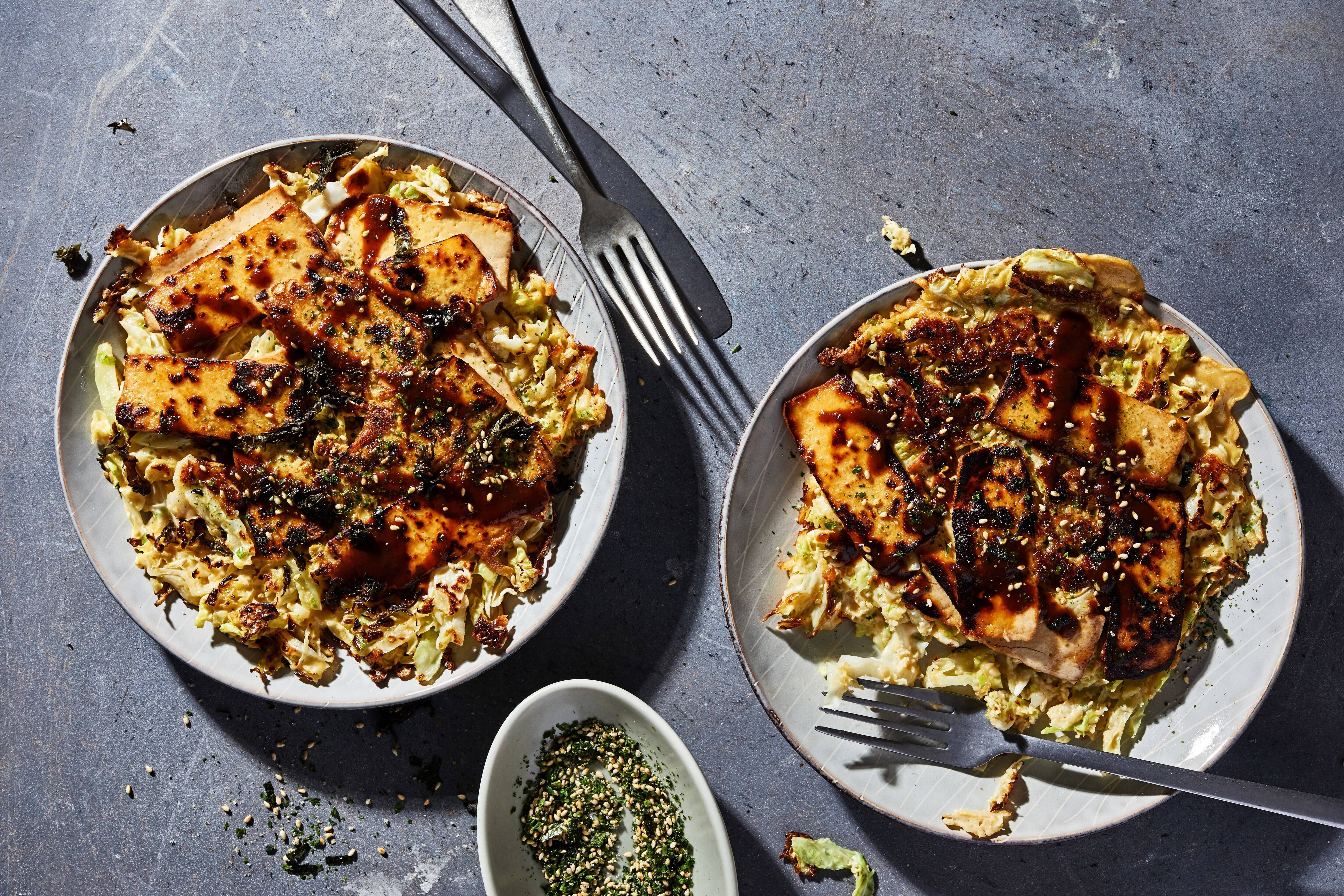 Photos by Stacy Zarin Goldberg for The Washington Post; food styling by Lisa Cherkasky for The Washington Post | Okonomiyaki With Smoked Tofu - Want to make this gluten-free? >> Use rice flour or a gluten-free flour blend instead of the all-purpose.
- The original recipe called for bacon slices >> but this recipe calls for thinly sliced smoked tofu to keep it vegetarian. Tempeh bacon would be another good substitute.
Make Ahead: The batter needs to rest for at least 30 minutes (at room temperature) and as long as 8 hours (refrigerated) before you make the pancakes. Want to save this recipe? View it on Voraciously here and click the bookmark icon below the serving size at the top of the page to add it to your Reading List. For easy printing and scaling, view this recipe in our Recipe Finder. Servings: 2 to 4
Active time: 40 mins
Total time: 1 hour Ingredients - 6 tablespoons all-purpose flour
- 5 tablespoons plus 2 teaspoons water
- 1 tablespoon low-sodium soy sauce
- 7 ounces (about one-quarter of a large head) Savoy or green cabbage, finely shredded, divided
- 2 large eggs, lightly beaten
- 2 scallions (white and green parts), trimmed and finely chopped
- One (1-inch) piece peeled fresh ginger root, grated (2 teaspoons)
- 1 tablespoon vegetable oil, divided
- 3 ounces smoked tofu, thinly sliced (may substitute baked/marinated tofu or tempeh bacon; see headnote)
- A.1. or okonomiyaki sauce, for serving
- Crushed nori (dried seaweed) or furikake (Japanese rice seasoning), for serving
Steps1. In a large bowl, whisk the flour so it's clump-free, then whisk in the water and soy sauce to form a smooth batter. Cover with a plate and let rest for at least 30 minutes or refrigerate for up to 8 hours. (Resting will make the batter taste less floury and keep the finished pancakes smooth and light.) 2. Add half the cabbage to the bowl with the rested batter and mix well to combine. Add the eggs, the remaining cabbage, the scallions and ginger and mix to combine. Divide the mixture in half. 3. In a large nonstick skillet over medium-high heat, heat half the oil until shimmering. Using a large serving spoon, spread one portion of the cabbage mixture into the skillet, and use the back of the spoon to spread it out to about an 8-inch round. (It will continue to spread as it cooks.) 4. Arrange half of the tofu slices on top and cook until the pancake is set and lightly browned on the bottom, about 3 minutes. Using two large, flat spatulas, turn it over and cook until the other side is browned, about 4 minutes. 5. Transfer to a plate, and repeat with the remaining ingredients to make the other pancake. 6. Drizzle A.1. or okonomiyaki sauce over both pancakes, scatter the nori on top of each portion and serve. Adapted from "Cook Japanese at Home," by Kimiko Barber (Kyle Books, 2016). Tested by Joe Yonan. Nutrition information per serving (1/2 pancake and 1/2 tablespoon sauce): Calories: 160; Total Fat: 8 g; Saturated Fat: 2 g; Cholesterol: 110 mg; Sodium: 270 mg; Carbohydrates: 15 g; Dietary Fiber: 2 g; Sugars: 2 g; Protein: 10 g.  | Dessert | 🎧 "DFMU" by Ella Mai.
📺 Jacques Pépin makes asparagus.
📖 "Three Cheers for Hospitality" by Nereya Otieno in the Ann Friedman Weekly.
👀 Chocolate bars with black figs and pistachios.
🗣 If you liked this newsletter, please forward it to a friend! | 



 Email
Email 


0 Comments:
Post a Comment