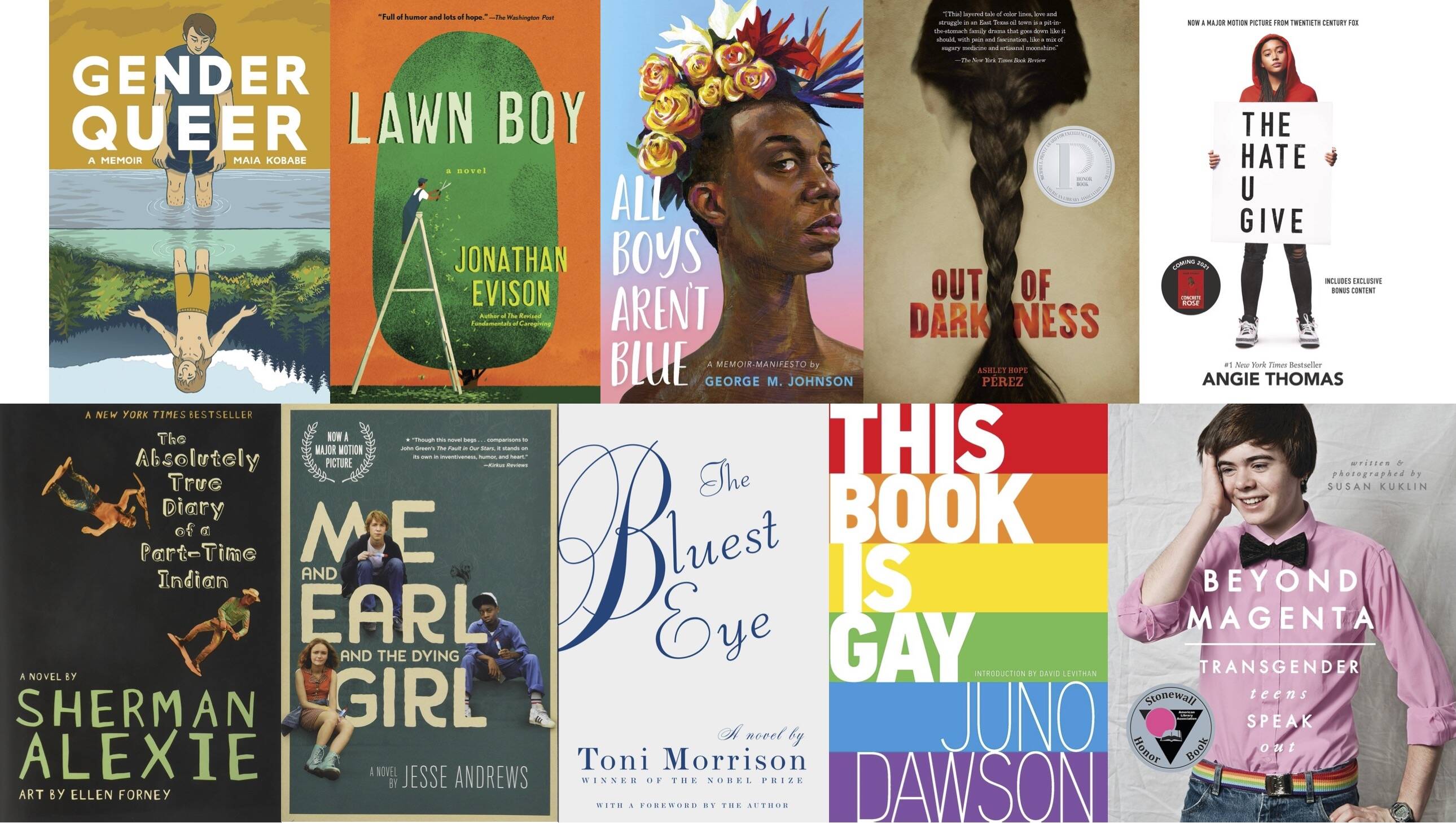
 The 10 most challenged books in the United States, according to a new report from the American Library Association. | This may be the most perilous National Library Week we've ever celebrated. Libraries and schools are under relentless attack from Republicans who've fused their lies about critical race theory with hysteria over pedophilia to create a death ray capable of vaporizing books. Last month, legislators in Idaho considered a bill that could have sent librarians to jail for allowing a child to check out, say, a book by Judy Blume. Texas is scouring its library shelves for "pornography." Virginia's new governor ran a campaign ad to save citizens from "the most explicit material you can imagine," which turned out to be Toni Morrison's novel "Beloved" (story). Teachers who object to Florida's "Don't Say Gay" bill have been accused of being "groomers" (story). Washington Post writer Radley Balko says, "We're witnessing the mainstreaming of QAnon" (story). This cynically engineered blend of racial and sexual terror resurrects the old moral panic once spread by such lurid bestsellers as "The Satan Seller" and "Michelle Remembers." A special report issued this week by the American Library Association finds that "library staff in every state faced an unprecedented number of attempts to ban books." Considering our endangered freedom to read, ALA President Patty Wong writes, "Library professionals are losing their jobs to protect this fundamental right." Last year, the number of book challenges tracked by the ALA's Office of Intellectual Freedom soared to a record level. Here are the top 10 most challenged books in the United States: | Josiah Osgood presents a modern new translation of Sallust's The War with Catiline—a brief, powerful book that has influenced how generations of readers have thought about coups and political conspiracies. | | | | | - "Gender Queer," by Maia Kobabe
- "Lawn Boy," by Jonathan Evison
- "All Boys Aren't Blue," by George M. Johnson
- "Out of Darkness," by Ashley Hope Perez
- "The Hate U Give," by Angie Thomas
- "The Absolutely True Diary of a Part-Time Indian," by Sherman Alexie
- "Me and Earl and the Dying Girl," by Jesse Andrews
- "The Bluest Eye," by Toni Morrison
- "This Book is Gay," by Juno Dawson
- "Beyond Magenta," by Susan Kuklin
Yesterday, PEN America issued a report titled "Banned in the USA." It confirms that "the scale and force of book banning in local communities is escalating dramatically." Half the states in the Union — led by Texas, Pennsylvania and Florida — now have book bans of one kind or another, affecting 2 million students. And states are also debating and passing laws to gag and monitor teachers' speech. The majority of the books being challenged address race, racism and LGBTQ+ identities. PEN America notes that in most cases, schools and communities are pulling these books without following their own established guidelines for evaluating content. Instead, "removing books at the sign of any parental complaint — regardless of policy — is becoming expected and almost reflexive." Accusations of "obscenity" or "pornography" — no matter how absurd — are enough to make a book disappear. In this climate of fear and innuendo, students' First Amendment rights are routinely ignored. (Yesterday, Congress held a hearing on book banning in the nation's schools and libraries.) PEN America is also alarmed to see that complaints are now coming from state officials, elected lawmakers and national groups promoting their intolerance on social media. Using replicated lists of "radical" books and cookie-cutter complaints, these coordinated attacks on literature routinely overwhelm and supersede local control of schools and libraries. The free speech organization concludes its report by saying that public pressure and legal threats "appear to have an impact" on stopping or reversing some restrictions on books. But clearly, the momentum is on the side of the book burners. Along with its new report, PEN America has posted an Index of School Book Bans from July 1, 2021 to March 31, 2022. This voluminous spreadsheet of more than 1,500 book bans includes titles by Booker winner Margaret Atwood, Nobel laureate Toni Morrison and National Book Award winner Jacqueline Woodson. It's a depressing monument to our country's intolerance, ignorance and paranoia. Apropos of nothing, this year the U.S. Mint is issuing a special platinum coin commemorating freedom of speech. These coins are sold at a high premium and are not intended for everyday use. (Stop that metaphor!) 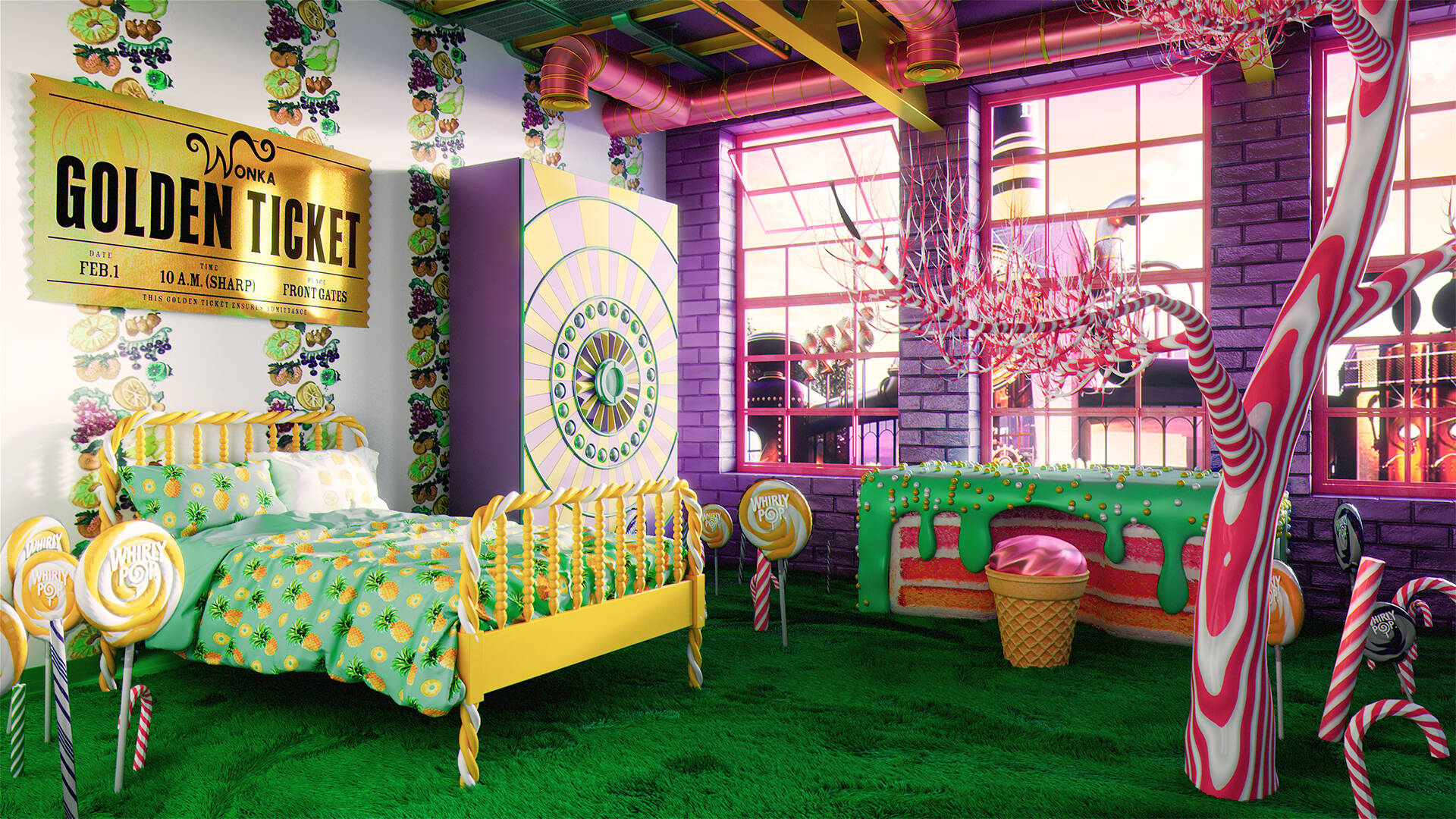 This bedroom inspired by Roald Dahl's "Charlie and the Chocolate Factory" was designed for Home Essentials. (Photo courtesy of Home Essentials) | When Max threatens to eat up his mother, he's sent to bed without eating anything, and wild things happen in his room. "A forest grew," Maurice Sendak writes, "and grew and grew until his ceiling hung with vines and the walls became the world all around and an ocean tumbled by." For kids (and their parents) who want to create some book magic in their own rooms, the U.K. retailer Home Essentials offers dazzling suggestions. To celebrate World Book Day on April 3, the company commissioned designers to create five bedrooms inspired by "Charlie and the Chocolate Factory," "The Gruffalo," "James and the Giant Peach," "The Lion, the Witch and the Wardrobe" and "The Very Hungry Caterpillar." The results would impress even Veruca Salt. (See for yourself.) Giant animals! Handcrafted furniture! Lushly painted walls! As practical models, these surreal rooms — created with the help of 3D rendering software — are probably no easier to reach than Narnia. (And honestly, how would lickable wallpaper work long term?) But there are lots of clever ideas here you could borrow and modify for your own kids' literary design adventure. "Franklin is the only Founding Father who, evidently, had a sense of humor," says biographer Stacy Schiff. In a less flattering appraisal, Franklin's contemporary Samuel Johnson called him "the Master of Mischief." They're both right. It's Franklin's wit, his slippery irony, that keeps him eternally modern. On Humility: "I cannot boast of much success in acquiring the reality of this virtue, but I had a good deal with regard to the appearance of it." "Benjamin Franklin" is the latest documentary from Ken Burns, which is now streaming on PBS (watch). The four-hour, two-part series highlights Franklin's remarkable inventions and diplomatic acumen while also confronting the man's flaws and moral contradictions. Franklin's wiliness infuriated some of his political rivals in the 18th century. Today, we're more likely to be disturbed by his slaveholding and his attitude toward indigenous people. Burns suggests that except for "kinda knowing" that Franklin is on the $100 bill and did something with a kite and electricity, our knowledge of the man has "fallen off." That's classic Burnsian spin, which Franklin, the patron saint of advertising, would have appreciated. In fact, far from falling off, Franklin's star keeps rising. In the 21st century, he's already been the subject of popular and critically acclaimed biographies by Schiff, H.W. Brands, Edmund S. Morgan, Walter Isaacson, Gordon S. Wood, Thomas S. Kidd, Nick Bunker and Edward J. Larson. Just next week, we'll get "Benjamin Franklin's Last Bet," by Michael Meyer. And Franklin's delightful autobiography remains far and away the most popular book by any Founding Father. (Try the handsome edition from the Library of America.) But even if you're very familiar with this bounty of literature, that will take nothing away from your enjoyment of Burns's documentary. It's elegantly edited, as always, and filled with classic paintings, etchings, documents and insightful comments from a range of engaging historians. Mandy Patinkin does a wonderful job serving as Franklin's voice, though I'll always picture the Pennsylvania delegate as bewigged Howard da Silva in the musical "1776." Incidentally, Franklin, the first U.S. Postmaster General and the author of "The Way to Wealth," would want me to remind you to stock up on Forever stamps. The Postal Service announced this week that the price for mailing a first-class letter will rise on July 10 from 58 cents to 60 cents. "For age and want, save while you may." 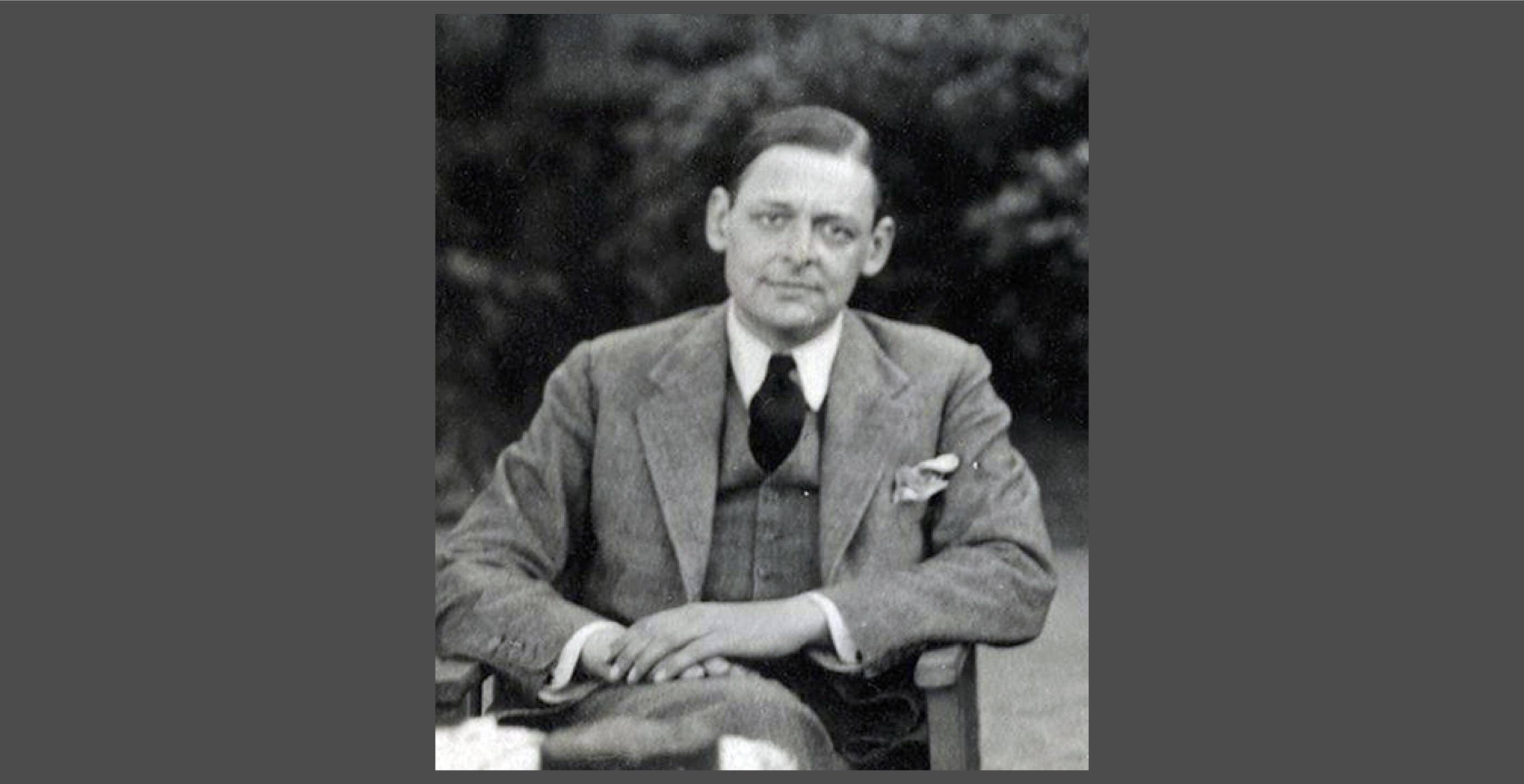 T.S. Eliot in 1934. You can't tell from this photo, but he's wearing the bottoms of his trousers rolled. (Photo by Lady Ottoline Morrell) | April, as you may have heard, is the cruelest month. T.S. Eliot immortalized that judgment 100 years ago in his haunting poem "The Waste Land." To celebrate the centenary of this modernist masterpiece, Faber & Faber, where Eliot once worked, has issued a new recording of his poems performed by Edoardo Ballerini. He's a moderately successful actor — "The Sopranos," etc. — but he's a giant in the audiobook world, where he's narrated hundreds of titles and twice been named Best Male Narrator by the Audio Publishers Association. Old recordings of Eliot reciting his poems always sound like parodies to me — as though he's actually sitting on his Nobel Prize. Listening to this new version of "The Waste Land and Other Poems," I like the way Ballerini retains hints of Eliot's voice while dialing back the arch brittleness so we can enjoy the lines. You can hear Ballerini tonight at 7 p.m. ET at the Queens Public Library in New York, where he'll read and talk about Eliot's poetry. This free event will be streamed on Facebook and YouTube (details). Go ahead — dare to eat a peach. 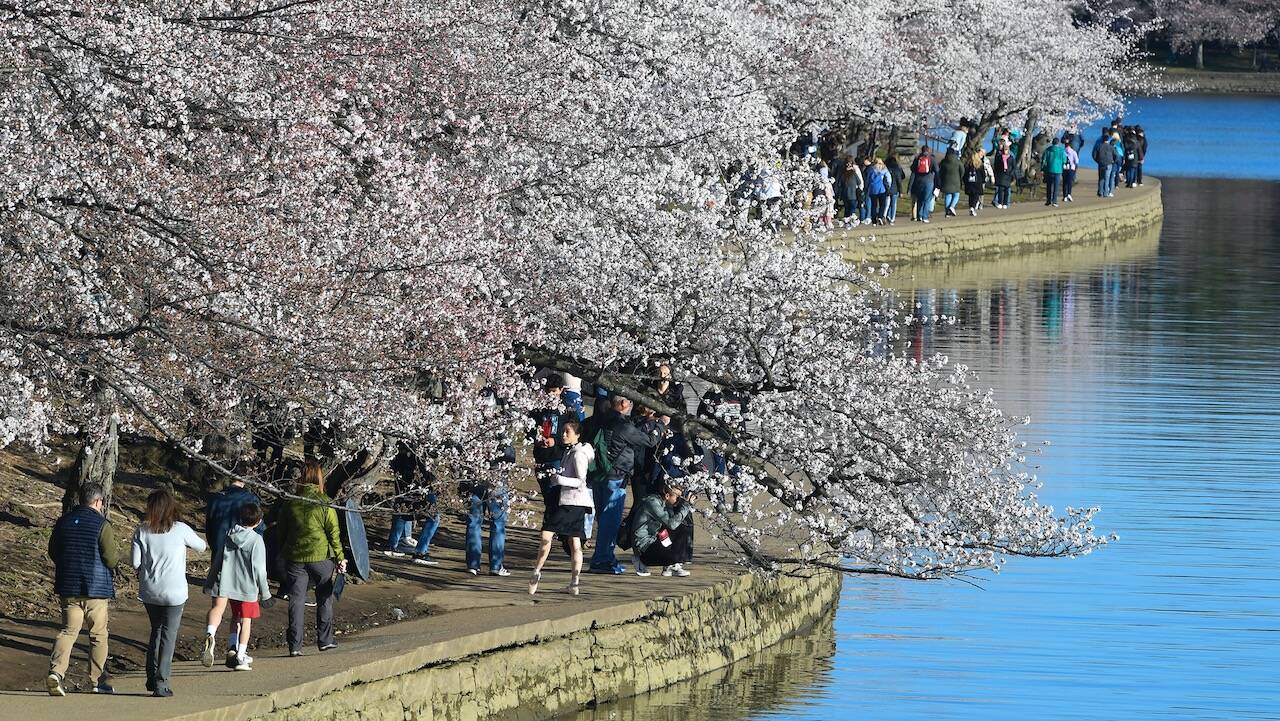 People walk along the Tidal Basin to view blooming cherry blossoms in Washington on March 21, 2022. (Photo by Matt McClain/The Washington Post) | Speaking of April's cruelty, this spring the cherry blossoms in Washington experienced premature effectuation. Our legendary trees, a gift from the people of Japan 110 years ago, reached peak bloom back on March 21 (the eighth-earliest ever). But the celebrations here continue apace, including tomorrow's National Cherry Blossom Festival Parade. (A guide to all the can't-miss events.) Tonight, the Library of Congress is offering a presentation on its collection of Japanese prints celebrating spring cherry blossoms, summer fireflies and other seasonal images. The talk, streaming at 7 p.m. ET, will be given by Katherine Blood, co-author of "Cherry Blossoms: Sakura Collections from the Library of Congress." This virtual event is free; you may register here. The Library will continue celebrating tomorrow with Japanese Culture Day featuring activities for the whole family, including drum performances, karate demonstrations and arts and crafts. These in-person events are free and open to the public, but reservations for timed entry are required. 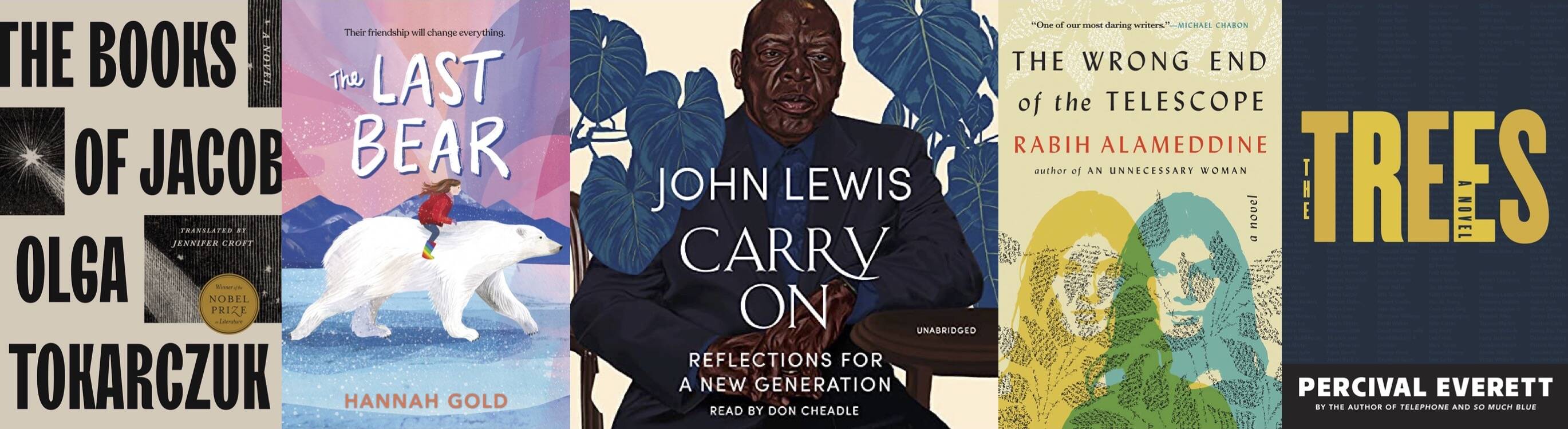 Riverhead; HarperCollins; Grand Central; Grove; Graywolf | This week's awards and literary honors: - "The Books of Jacob," written by Nobel Prize-winner Olga Tokarczuk and translated from the Polish by Jennifer Croft, has been shortlisted for the International Booker Prize. Tokarczuk's 1,000-page epic is based on the life of an 18th-century Polish mystic who claimed to be the Jewish messiah (rave). The International Booker Prize — worth about $65,000 — honors the world's best work of fiction translated into English (full shortlist). Tokarczuk previously won the award in 2018 for "Flights."
- Hannah Gold's "The Last Bear" (grades 3-5) was named best children's book by Waterstones, the U.K. bookseller. Ciara Smyth's "Not My Problem" (grades 8 and up) was named the best book for older readers. And Harry Woodgate's "Grandad's Camper" (preschool to grade 2) won the prize for best illustrated book. (Teachers working in Florida and Texas are duly warned that these children's books acknowledge the existence of climate change and gay people.)
- "Carry On: Reflections for a New Generation," by John Lewis, won the Grammy for Best Spoken Word Album. The book, warmly narrated by actor Don Cheadle, is a compilation of very short essays — on forgiveness, courage, voting, etc. — by the civil rights activist and congressman who died in 2020 (obituary). I've been listening to "Carry On" all week as I walk to and from work, and it never fails to fill me with happiness and inspiration.
- Rabih Alameddine's "The Wrong End of the Telescope" has been named winner of the PEN/Faulkner Award for Fiction. Alameddine will accept the $15,000 prize and read with the other finalists at a virtual ceremony hosted by yours truly on May 2 (tickets).
- The Cleveland Foundation announced the winners of the Anisfield-Wolf Awards, which honor books that confront racism and explore diversity:
Fiction: "The Trees," by Percival Everett
Poetry: "The Renunciations," by Donika Kelly
Nonfiction: "Of Fear and Strangers: A History of Xenophobia," by George Makari (review)
Nonfiction: "All That She Carried: The Journey of Ashley's Sack, a Black Family Keepsake," by Tiya Miles (one of our 10 best books of 2021)
Lifetime Achievement: Ishmael Reed. Way back in 1989, a review in The Washington Post said that Reed "is without doubt our finest satirist since Twain" (review). 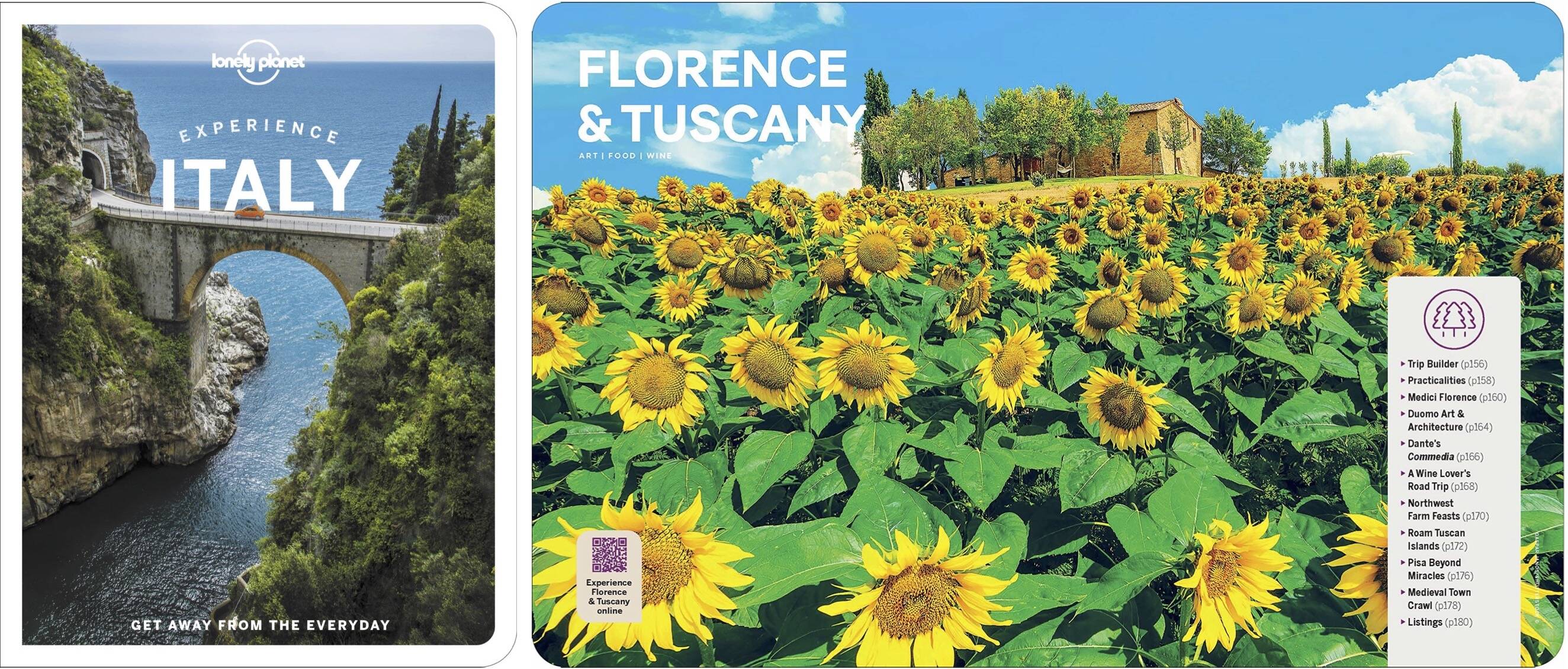 Lonely Planet | "There is no frigate like a book," which is a good thing because I've been stuck at home for two frigate years. International tourism is starting to pick up (story), but as our Travel section reported last month, publishers were particularly hard hit by the pandemic (story). U.S. travel book sales dropped by about 40 percent in 2020. Lonely Planet is ready for a new surge of wanderlust. In 2019 the publisher started interviewing travelers in the U.S. and U.K. to get a better understanding of their planning process. The result of that research is an ambitious series called Experience. The first six books have just been released, with 21 more on the way over the rest of this year. My wife and I are Rick Steves groupies, but these new Experience guides from Lonely Planet are irresistibly attractive. The layout is clearly designed for the Instagram era: Lots of gorgeous photos on airy pages sprinkled with curious and handy tidbits as opposed to columns of encyclopedic detail. Chris Zeiher, senior director of sales and marketing at Lonely Planet, took a moment away from the London Book Fair yesterday to talk with me. Zeiher said Lonely Planet editors realized that a new travel guide needed to be rooted in the experience of a place instead of in the information about a place. "People want to be able to 'story tell' when they get back from their trips," he said. These books, organized around dozens of experiences and packed with stunning sites and delicious meals, almost create that story for you. Annotated maps suggest various itineraries, with advice on how many days to spend and what city to designate as your hub. Laced throughout the guide are brief essays explaining local history, customs, delicacies. There are also recommendations for books, music and movies to get ready before you leave. And another feature I particularly like is a chapter that shows events and sights grouped into the four seasons. (Venice in June is not Venice in January.) Throughout each guidebook, locals suggest hidden cultural riches and their favorite restaurants. "We think the people that know the destination best are those who live there," Zeiher says. "We want them to bring us in on a secret. So, tell us what you do as a local and give us that kind of insight that we might not be able to find by doing a quick Google search." I don't know if the Experience guide would be the only travel book I'd buy, but it's the one that would make me most excited to go. 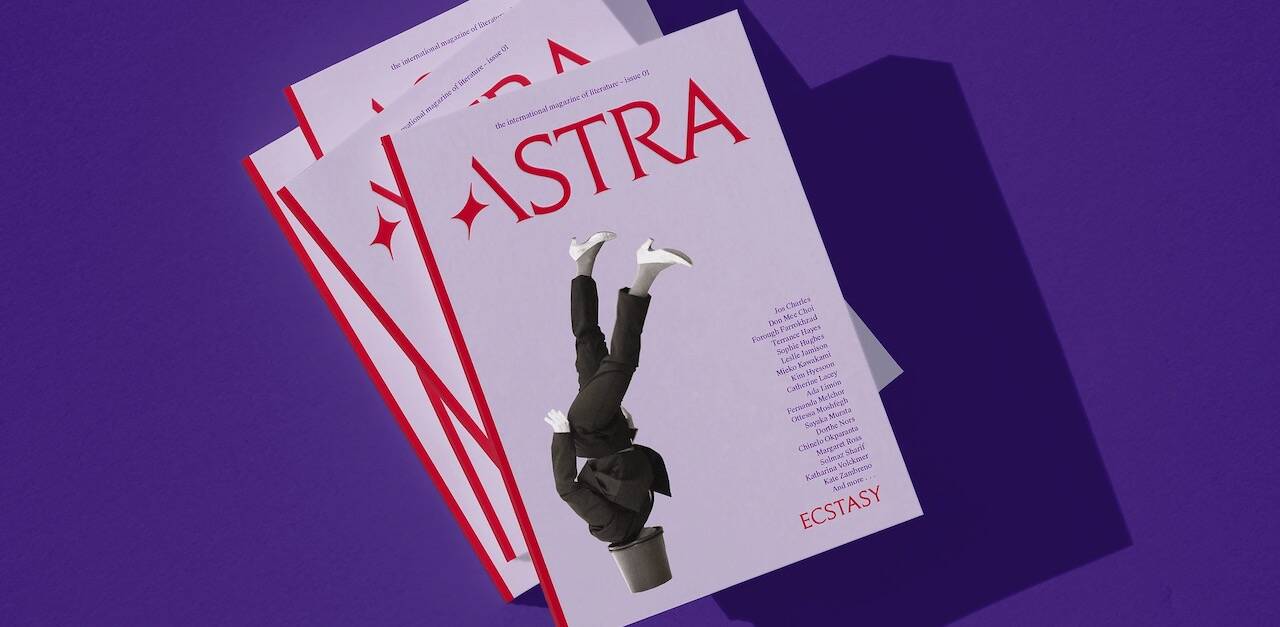 The first issue of Astra, a new international literary magazine. (Courtesy of Astra Publishing House) | A new biannual journal called Astra just arrived. The first issue is dedicated to the theme of "ecstasy," which anybody who successfully launches an international literary magazine in this dismal media climate should be feeling. Astra, which contains fiction, nonfiction and poetry from around the world, demonstrates the vibrancy of a writing community unfenced by political boundaries or geographical distance. Some of these writers you know. There are poems by Terrance Hayes and Ada Limón, fiction by Ottessa Moshfegh and Catherine Lacey, and nonfiction by Leslie Jamison. About a third of the first issue is work translated from Danish, French, Japanese, Swedish, Korean, Chinese, German and other languages. The writers are both newly discovered and well established (such as Japanese author Mieko Kawakami, whose novel "Heaven" was shortlisted this week for the International Booker Prize). It's an astonishing range of material that offers a tour of contemporary international literature for the price of a single paperback. By design, the pieces are relatively short, striking and immediately accessible. In her introduction to the first issue, editor-in-chief Nadja Spiegelman writes, "It is a common misconception that international literature must be more nutritious, more medicinal than writing close to home." These are not works in translation presented as intellectually enriching drudgery. Astra also includes an eye-catching selection of photos, graphics and comics from around the world. (Editor Spiegelman is the daughter of Pulitzer Prize-winning graphic novelist Art Spiegelman.) The next print issue of Astra, expected in October, will focus on the subject of "Filth." If you're bored by a certain sameness, a deflating parochial quality to what you've been reading lately, give Astra a chance. By next week, you should be able to find copies at indie bookstores – or why not subscribe here? 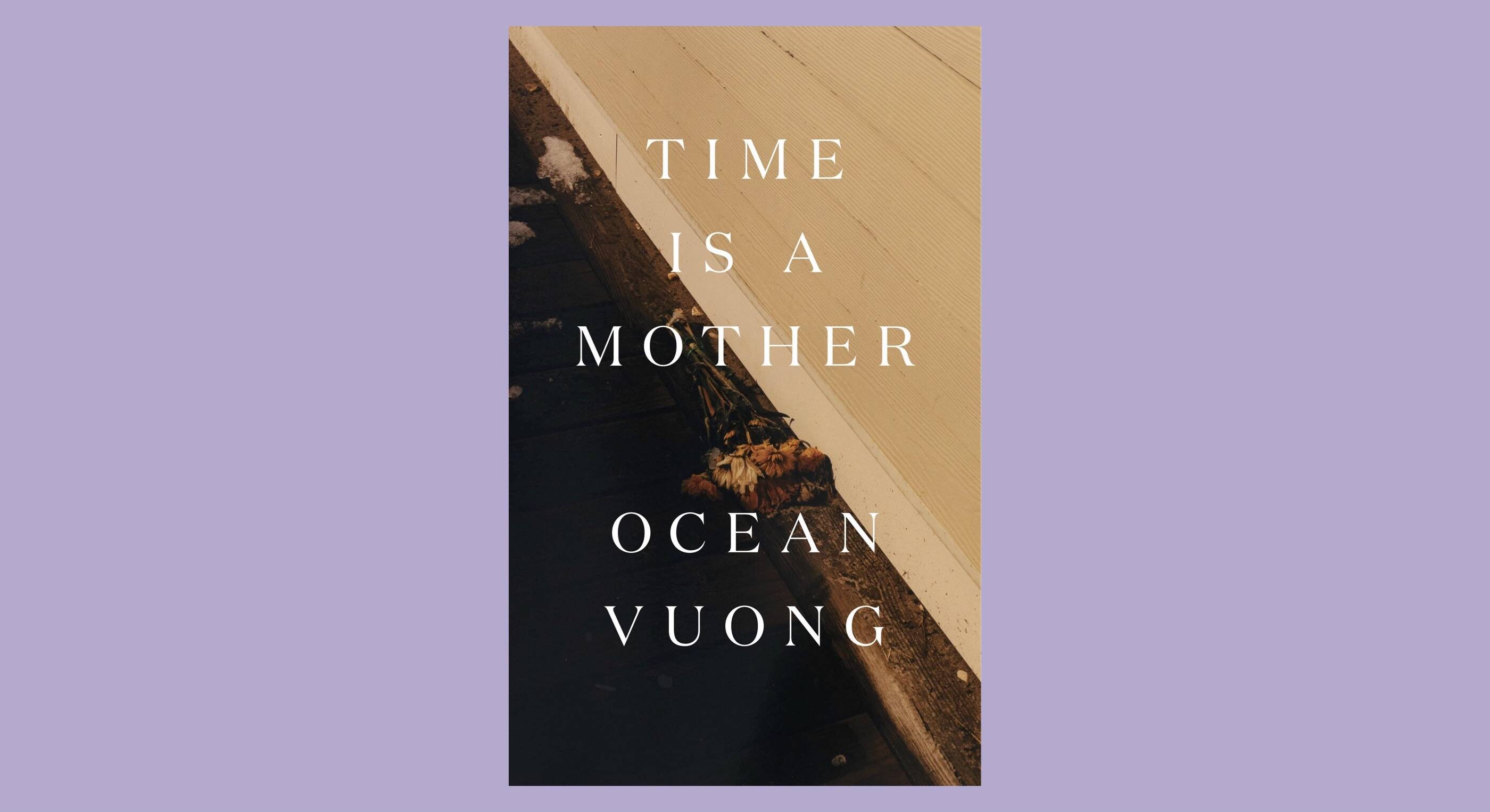 (Penguin Press) | I first encountered Ocean Vuong's work in 2019 when I reviewed his extraordinary autobiographical novel, "On Earth We're Briefly Gorgeous" (rave). But people who were paying better attention had read his debut poetry collection, "Night Sky with Exit Wounds," which won the T.S. Eliot Prize in 2017. Vuong was 2 years old when he and his mother came to the U.S. from Vietnam as refugees. Life was not easy for a poor single mother and a gay boy living in Hartford, Conn. Although Vuong's mother never learned English, when he became a successful writer and did public readings, she liked to sit next to him and look out at the audience, amazed and delighted by the reactions to her son. She died in 2019. His new collection, "Time Is a Mother," was written in the shadow of that loss. Last night, Vuong spoke to a sold-out crowd at the Sixth & I Historic Synagogue in Washington. Near the end of the evening, he said, "I'm a citizen in this country of grief, and I realize there are so many of us here." Almost Human It's been a long time since my body.
Unbearable, I put it down
on the earth the way my old man
rolled dice. It's been a long time since
time. But I had weight back there. Had substance
& sinew, damage you could see
by looking between your hands & hearing
blood. It was called reading, they told me,
too late. But too late. I red. I made a killing
in language & was surrounded
by ghosts. I used my arsenal
of defunct verbs & broke
into a library of second chances,
the ER. Where they bandaged
my head, even as the black letters
kept seeping through,
like this. Back there, I couldn't
get the boys to look at me
even in my best jean jacket.
It was 2006 or 1865 or .327.
What a time to be alive! they said,
this time louder, more assault rifles.
Did I tell you? I come from a people of sculptors
whose masterpiece was rubble. We
tried. Indecent, tongue-tied, bowl-cut & diabetic,
I had a feeling. The floorboards creaked
as I wept motionless by the rehab window.
If words, as they claimed, had no weight
in our world, why did we keep
sinking, Doctor—I mean
Lord—why did the water swallow
our almost human hands
as we sang? Like this. From "Time Is a Mother," by Ocean Vuong. Reprinted by arrangement with Penguin Press, a member of Penguin Group (USA) LLC, A Penguin Random House Company. Copyright © Ocean Vuong, 2022. 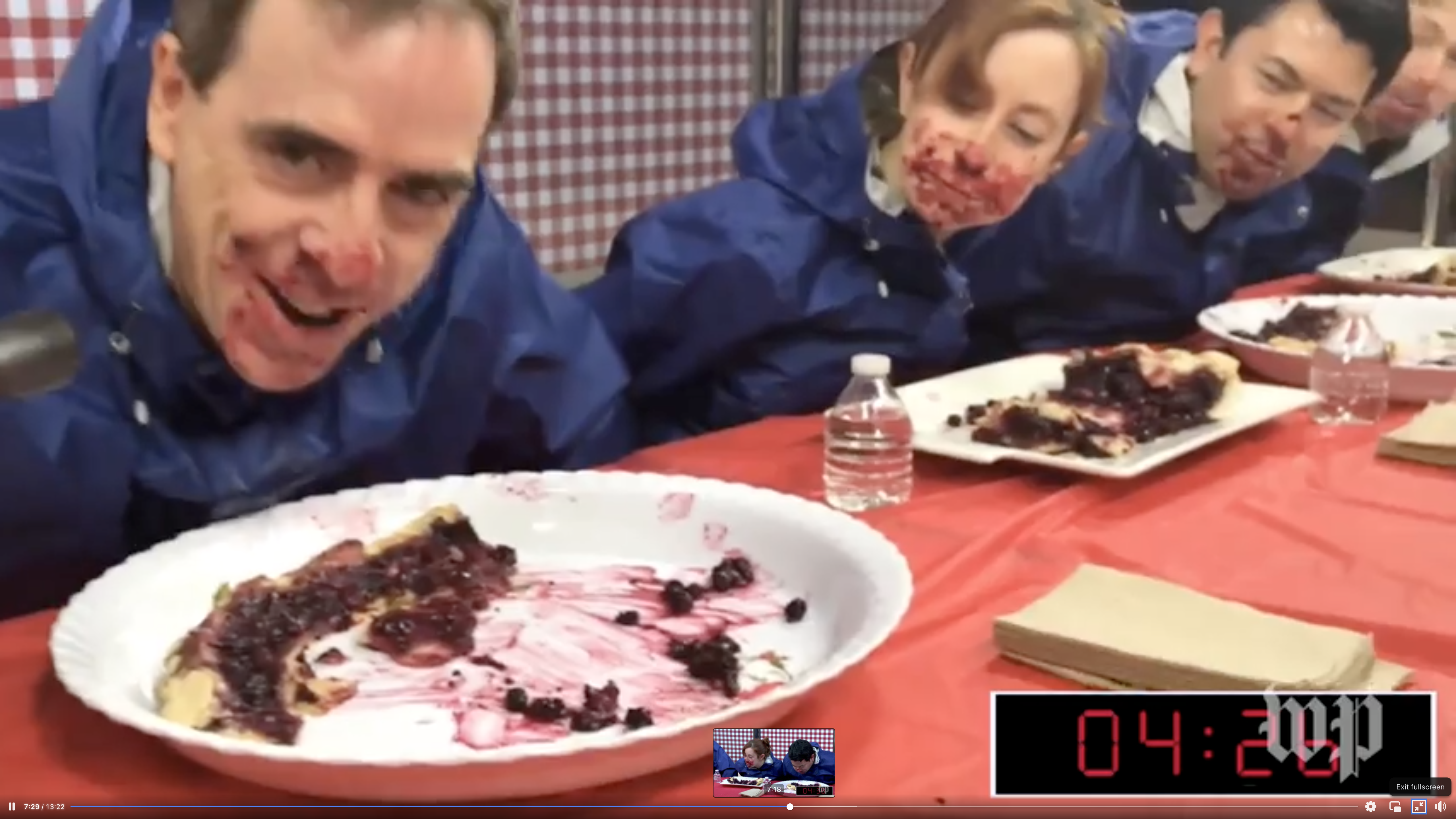 Ron Charles, Sarah Parnass, Brian Cleveland and Drew Goins at a pie-eating contest to commemorate Pi Day at The Washington Post, March 14, 2017. (Screenshot) | About five years ago on Pi Day (3/14), T.J. Ortenzi convinced me to participate in a pie-eating contest in the newsroom. The sweet ordeal was broadcast live on The Post's Facebook page. (Watch, if you can stomach it.) It was never a fair fight. I was twice as old as the other contestants, one of whom casually mentioned that he'd eaten half a Peking duck that morning to warm up. Worse, I was just finishing a 30-day no-sugar diet. Four minutes after the pie-eating contest began, I thought the top of my head was going to blow off. Thankfully, I did not win — the prize was another pie — but I did stay in touch with T.J., who went on to even greater, non-pie projects. By all accounts, he's something of a genius as a social media producer, mobile app innovator and reader engagement manager. This week, alas, he's leaving The Post to become the director of audience at the Baltimore Banner. When I got to the office this Wednesday, I discovered on my desk an enormous apple pie. From T.J. Meanwhile, send any questions or comments about The Post's book coverage to ron.charles@washpost.com. You can read last week's issue here. If your friends might enjoy our free newsletter, please forward this email to them. They can subscribe by clicking here. Did I mention it's free?
Interested in advertising in our bookish newsletter? Contact Michael King at michael.king@washpost.com. |





 Email
Email 


0 Comments:
Post a Comment