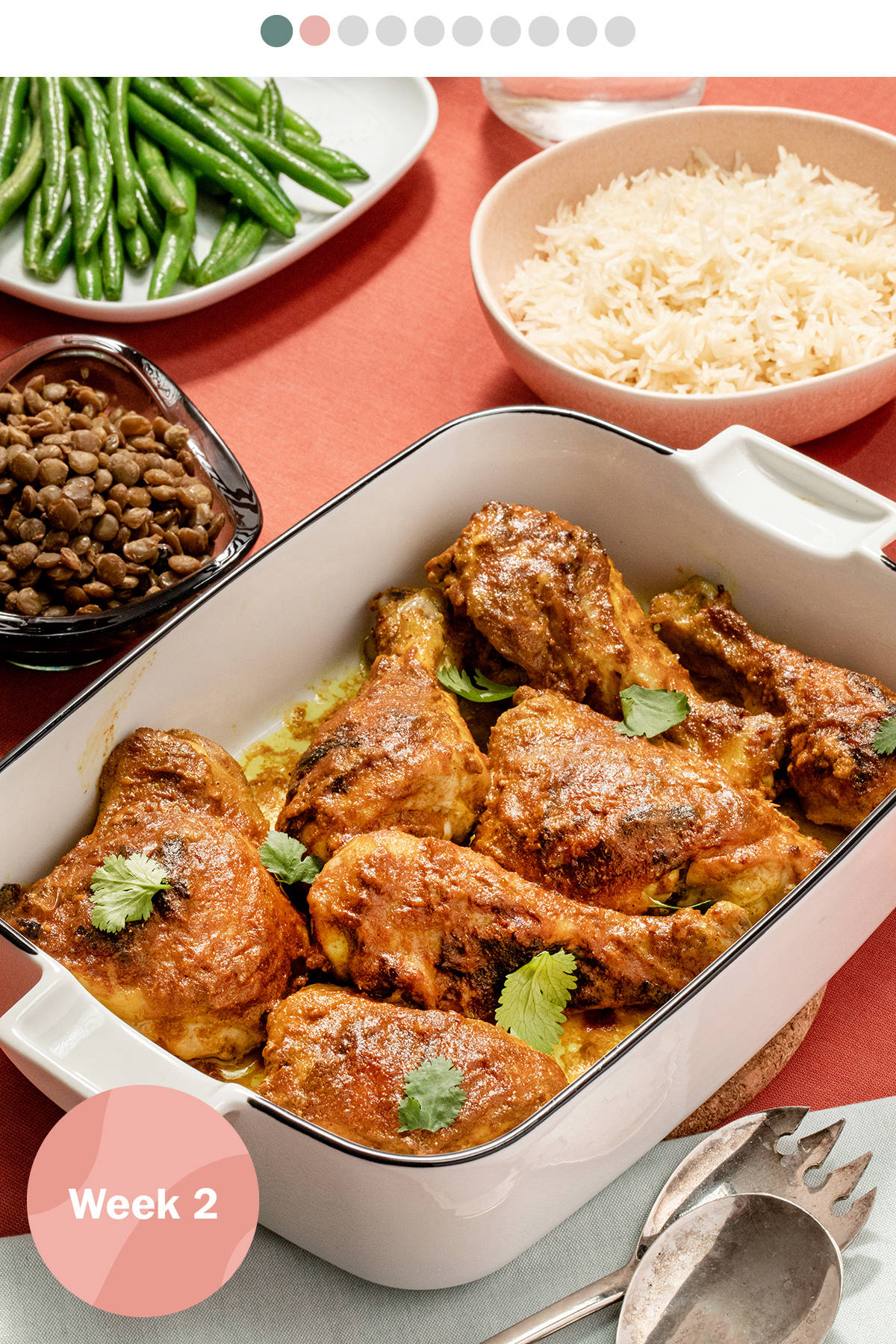
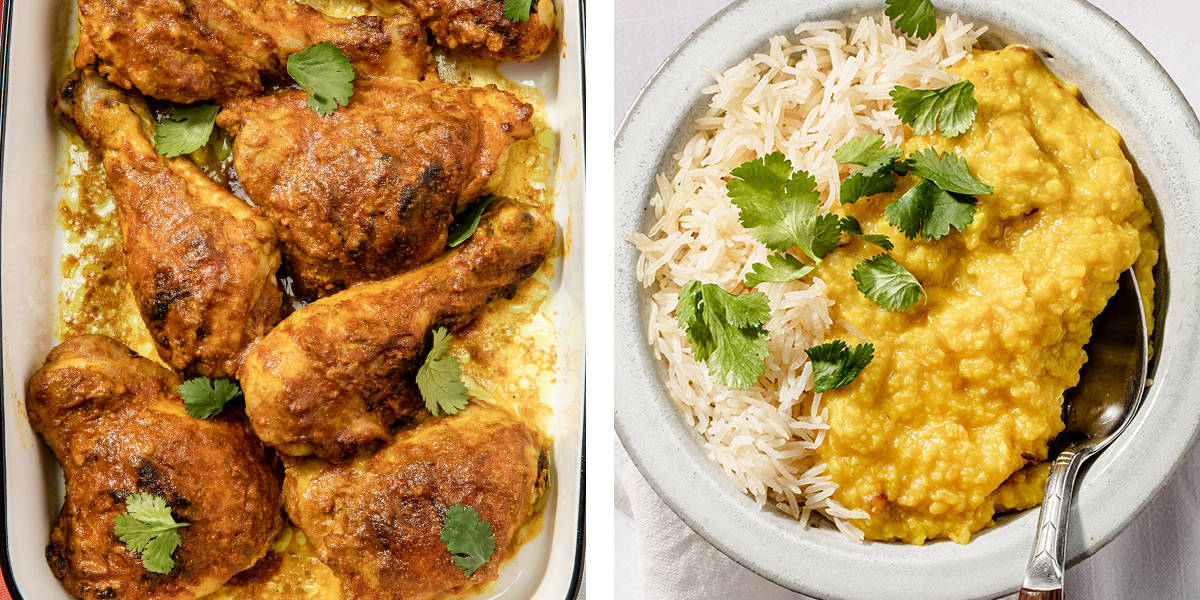
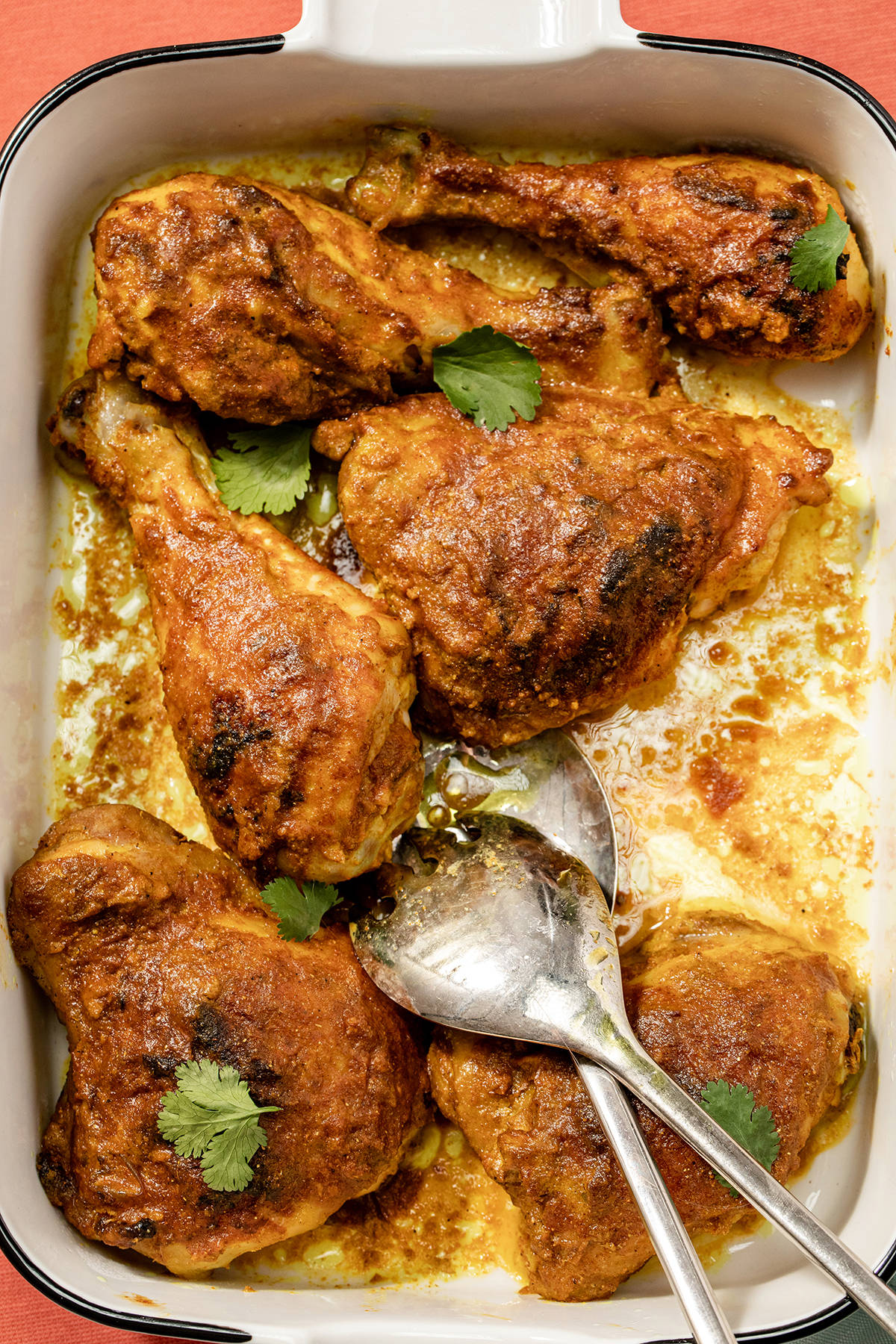
'At Home With Madhur Jaffrey'Learning to work with spices and recognizing how much they can do to enrich a dish and deepen its flavors has probably changed my cooking more than anything else: It has resulted not just in my food tasting better, but it has made me enjoy the preparation process even more. And I have Madhur Jaffrey to thank for it. You probably aren't surprised to see her name here. The Indian-born food writer, television host and prolific cookbook author may have started out as an actress (in Merchant Ivory films, no less … swoon!), but she's famous now for bringing Indian cuisine into American and British home kitchens, starting with "An Invitation to Indian Cooking" in 1973. It's an excellent book, as are the other 29 she has written (including a memoir), but for this collection I'm going with "At Home With Madhur Jaffrey," and I think the title might provide a clue as to why. This is what she cooks at home, distilled for home cooks. It's also where she unpacks what sets Indian food apart, what is responsible for "its tingling excitement" and endows it with "health-giving properties." That would be its deep-rooted understanding of spices. Jaffrey states the book's purpose in the introduction: to demystify those spices and enable readers to access their culinary powers with ease and confidence. She follows through, as always, and makes "Indian dishes as simple and straightforward to prepare, as, say, a beef stew," taking the reader's hand "through the entire process with clear instructions and detailed explanations." She does this by favoring simpler techniques and reducing steps in her recipes. Nothing is dumbed-down; no pungency is lost. I never mind following the traditional methods when I'm making Indian food; I really enjoy each step of the flavor-building. It's super nerdy, maybe, but the aromas are so heady and intoxicating; I like it when they fill my kitchen and waft out into the rest of my apartment. It's like a better-scented candle. But I admit, Jaffrey's shortcuts tend to be so effective, I'm inclined to follow them if I'm in a hurry. One entails cooking meat in a marinade that combines both dry aromatics (spices) and wet seasonings (onions, garlic, ginger), instead of browning each of those elements, along with the meat, separately. Her Baked Chicken Curry shows off this streamlined approach to succulent advantage, and most of the recipe is done the night before, so you can just chuck it in the oven before dinner. She also calls for a reduced — but not too much — range of spices to make shopping more manageable and preparation a little quicker. Finally, she thinks about the way her own cooking has changed due to her busy life and targets recipes that are already easy. There's something else I like about this book: Jaffrey always draws on the history and geography of whatever she's preparing and celebrates the regionalism of Indian cuisine, but here, she broadens her reach, covering "the whole family of South Asian nations." That means we get an overview of dishes from throughout mainland India, plus Sri Lanka, Bangladesh and Pakistan; better yet, we can get them on our dinner tables with little effort.  | Menu | Baked Chicken Curry This spice-suffused chicken guarantees maximum flavor with minimal work. My Everyday Moong Dal Meet a complexly flavorful bowl of comfort food you can eat every day and never tire of.  | Focus on the spices | In the glossary at the back of the book, Jaffrey provides useful and educational information about the spices featured in the recipes. I loved learning that black pepper, native to South India, was used in copious amounts there until chiles showed up in the late 15th century. The first entry, asafetida, is vital for anyone who's learning how to cook Indian food — that spice (it's a resin) is notoriously hard to describe; she does it effortlessly: "Only a very small amount gives Indian dishes their earthy, truffle-like flavor and aroma." She advises we buy it ground, in the smallest size offered, and make sure it's stored in a tightly closed container.  | Recipes | Baked Chicken CurryChicken, marinated in a blend of black pepper, lemon, ginger, garlic, yogurt, onion and five other spices, gets put in a baking dish and sent to the oven. That's it; that's the dish. Dinner is served. It's a quidditative recipe from "At Home With Madhur Jaffrey": It showcases the power of spices, in tandem, and edits out a bunch of steps from a traditional preparation without sacrificing flavor. You don't need to pre-cook your wet aromatics separate from your dry, or brown your meat. If you want a hint of sweetness, Jaffrey suggests adding 2 tablespoons of golden raisins. For easy printing and scaling, view this recipe on our website at washingtonpost.com/recipes. IngredientsServings: 4 to 6
Prep time: 30 minutes
Cook time: 1 1/2 hours, plus overnight marinating time 2 1/2 pounds chicken pieces, dark and white meat
1 teaspoon table salt
Freshly ground black pepper
2 tablespoons fresh lemon juice
2 teaspoons finely grated peeled fresh ginger
1 large clove garlic, crushed
1/3 cup whole milk plain yogurt
1 1/2 tablespoons ground coriander
2 teaspoons ground cumin
1/2 teaspoon ground turmeric
1/2 teaspoon cayenne pepper
6 green cardamom pods
A little canola or plain olive oil for basting
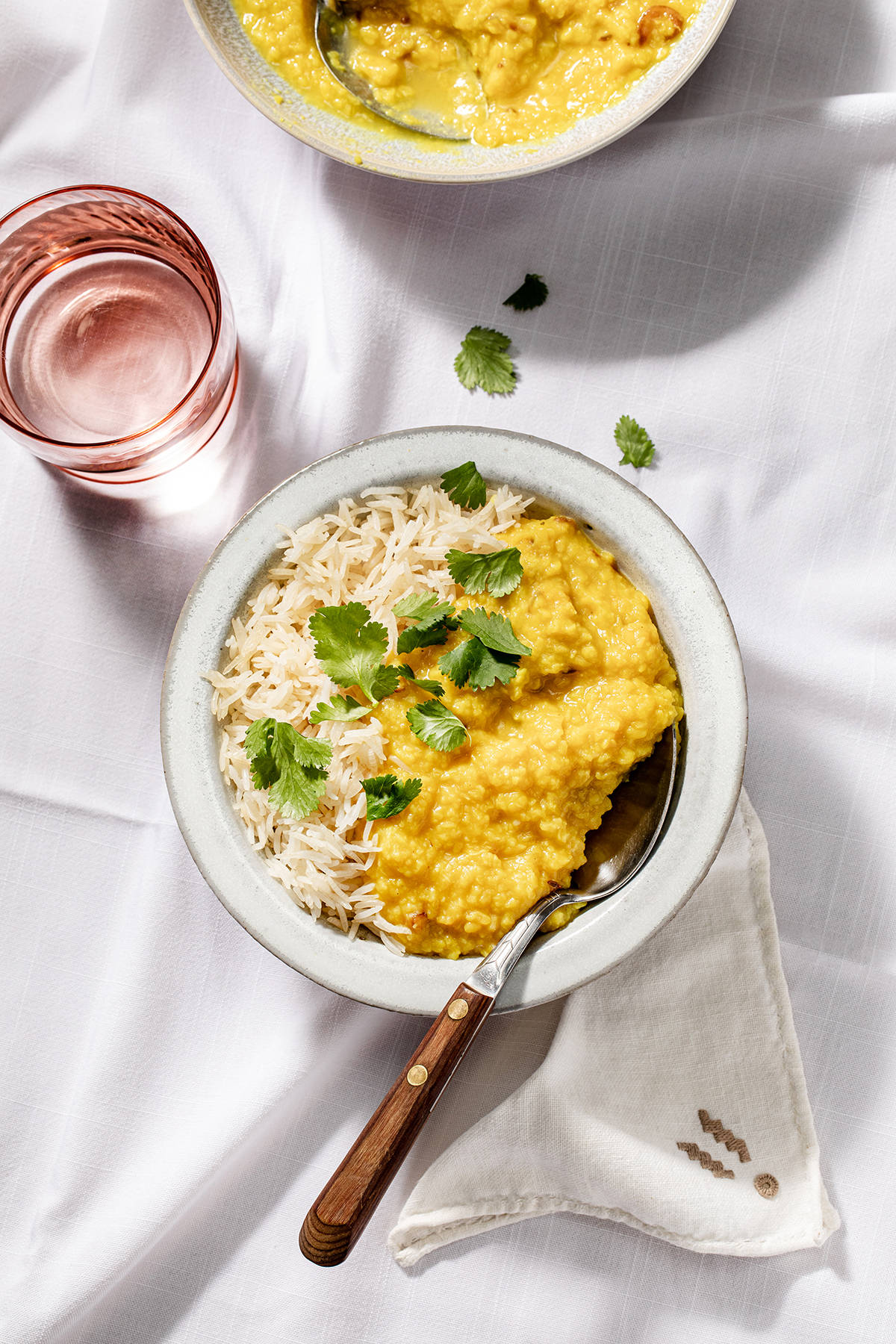
2 tablespoons finely chopped red onion or shallots StepsPut the chicken in a casserole-type dish so it fits easily in a single layer. Add the salt, lots of black pepper and the lemon juice. Mix well and set aside for 20 minutes. Combine the ginger, garlic, yogurt, coriander, cumin, turmeric, cayenne and cardamom in a bowl. Mix well. Rub the chicken with this mixture, cover and refrigerate overnight. Position an oven rack in the middle and preheat the oven to 400 degrees. Remove the chicken from the refrigerator and let stand for about 30 minutes. Brush the top with oil and scatter the onions over the top. Place in the oven for 30 minutes. Turn the chicken pieces over and put back in the oven. Cook an additional 40 minutes, basting every 10 minutes with the juices. Nutritional facts (per serving, based on 6 servings): Calories: 265; Protein: 39 g; Carbohydrates: 2 g; Fat: 11 g; Saturated Fat: 2 g; Cholesterol: 140 mg; Sodium: 579 mg; Fiber: 1 g; Sugar: 1 g. Everyday Moong DalA pulse- or legume-based simmer that's somewhere between a soup and a porridge, dal is a staple of Indian cuisine made, here, with split yellow lentils (or moong/mung beans). It's a major source of protein and, when served with rice (or bread) and yogurt (or a condiment made with yogurt), a formula that dates all the way back to ancient times and can be seen, in multiple iterations, on Indian tables worldwide. It's the sort of soothing, bolstering basic you can crank out — and will want to eat — every day. I may not have grown up with it, but it quickly became one of my go-to comfort foods. I predict Jaffrey's recipe will have a similar effect on you, as a cook or eater, or both. NOTE: Asafetida is available at Indian markets, specialty spice stores and online. For easy printing and scaling, view this recipe on our website at washingtonpost.com/recipes. IngredientsServings: 4 to 6
Prep time: 20 minutes
Cook time: 1 hour 10 minutes 1 cup (7 ounces) moong dal (hulled and split mung beans), washed and drained
1/4 teaspoon ground turmeric
3/4 teaspoon table salt, or to taste
2 tablespoons olive oil or ghee
1/8 teaspoon ground asafetida
1/2 teaspoon whole cumin seeds
1 to 2 dried hot red chiles (the short cayenne type)
1 medium shallot, peeled and cut into slivers StepsPut the dal in a medium pot and add 3 1/2 cups water. Bring to a boil. Skim off the white froth and add the turmeric and stir. Cover partially, turn the heat to a gentle simmer, and cook 45 minutes. Add the salt and stir. Turn off the heat. Pour the oil into a small frying pan and set over medium-high heat. When hot, put in the asafetida, cumin seeds and chiles, quickly, in that order. As soon as the chiles darken, a matter of seconds, add the shallot. Stir and cook until the shallots brown and then quickly pour the contents of the frying pan over the cooked dal and stir. Nutritional facts (per serving, based on 6 servings): Calories: 164; Protein: 8 g; Carbohydrates: 21 g; Fat: 5 g; Saturated Fat: 1 g; Cholesterol: 0 mg; Sodium: 298 mg; Fiber: 5 g; Sugar: 2 g. Join our virtual cookbook club! Chat about the books, ask questions and share your creations by joining the Essential Cookbooks Facebook group here, and show others you've joined the club by posting your recipe photos on Instagram using #voraciouslycookbooks. Have a question?Email us at voraciously@washpost.com or message @eatvoraciously on Instagram. Charlotte Druckman is a journalist and food writer. She conceived and edited the collection "Women on Food" and is the author of "Skirt Steak: Women Chefs on Standing the Heat and Staying in the Kitchen." In addition, she has written two cookbooks — "Stir, Sizzle, Bake: Recipes for Your Cast-Iron Skillet" and "Kitchen Remix: 75 Recipes for Making the Most of Your Ingredients," and co-wrote chef Anita Lo's "Cooking Without Borders." She lives in New York City, but you can find her more easily on Instagram (@chardrucks) or Twitter (@cettedrucks). Photos by Justin Tsucalas; food styling by Nichole Bryant; props by Limonata Creative; illustrations by Louisa Cannell, all for The Washington Post. | 



 Email
Email 


0 Comments:
Post a Comment